
Author
Anhui Heshun Import and Export Co., Ltd is a specialized manufacturer of Shade Awning, Shade Sails, Shade Net, Car Parking, Window Blinds, Balcony Fence, Privacy Screen, and other outdoor shade products. With the excellent technical staff and advanced machine 30 sets knitting machines; 5sets extruding machine), our company is able to produce superior quality products. The daily production capacity is 8 metric tons made of 100% pure imported HDPE. our products have been exported to American, European, The Middle East, Australian, Japan, Africa. We are located in Anhui province, near shanghai port and Nanjing.
Sarah M.
Construction sites are busy, dynamic work zones. Falling rubble, loose tools, paint splatters and flying dust are constant hazards for ground workers, pedestrians, and adjacent properties. Many project teams focus heavily on fall arrest systems to protect workers who are working at height, yet overlook one simple, cost-effective layer of protection: quality scaffolding debris netting.
A properly fitted HDPE construction safety net is far more than just a plastic mesh screen for keeping dust contained. It is a risk-mitigation tool that supports site safety compliance, cuts down on accident reports, and limits your company’s legal and financial liability when incidents happen. In this post, we break down the real risks debris netting addresses, how it protects your team and the public, and what to look for to make sure your netting performs when you need it most.
Debris netting is designed to contain falling materials on scaffolding, and it targets four of the most common recurring hazards on residential and commercial building sites.
1. Falling construction debris and small tools
Brick fragments, concrete chips, nails, screws, broken tile, scrap metal and hand tools are among the most frequent falling objects on scaffolding. Even a small fastener dropped from several floors up gains enough force to cause serious injury or permanent harm.
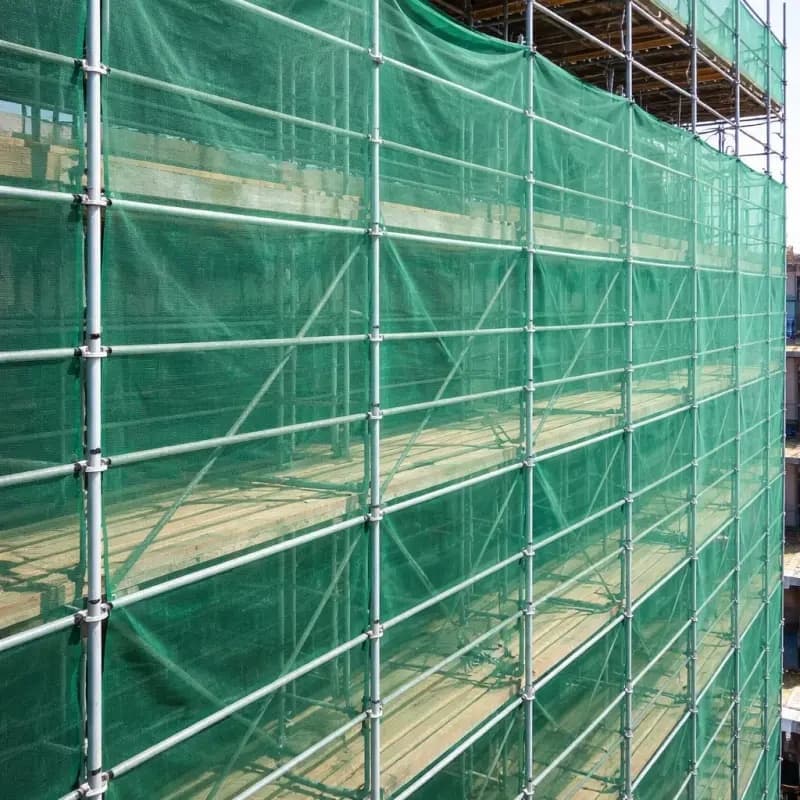
A heavy-duty scaffolding debris net creates a continuous containment barrier along the scaffolding frame. It catches lightweight and medium-weight falling materials before they reach ground level. It does not replace professional fall arrest netting for human fall protection — this is a critical distinction — but it stops object strikes, which are one of the top causes of construction site injuries to ground crew and passersby.
2. Dust, paint and construction residue migration
Renovation, demolition, sanding and exterior coating work generates huge volumes of fine dust, cement powder and paint overspray. Without a debris barrier, these particles drift onto nearby homes, parked vehicles, public walkways and neighbouring businesses.
Complaints from residents often lead to stop-work orders, fines and expensive clean-up claims. UV stabilized HDPE debris netting acts as a semi-permeable barrier: it allows airflow to prevent wind load build-up on scaffolding, while trapping most fine particulate and spray. This keeps the site tidy and reduces nuisance claims from the surrounding community.
3. Wind-borne material loss
On open or exposed sites, loose lightweight materials such as insulation, plastic sheeting and packing waste can be picked up by wind and blown off scaffolding. This creates litter across the neighbourhood and can even create hazards on nearby roads. Taut, well-secured construction safety net holds loose materials within the scaffolding bay and keeps site waste contained.
4. Uncontrolled public access exposure
Many building sites run alongside public footpaths. Clear, obvious scaffolding screening visually marks the work boundary. Pedestrians can instantly see that the area behind the mesh is an active construction zone. This visual deterrent reduces accidental wandering into dangerous work zones.
Lower Liability: Compliance, Insurance and Incident Response
Safety compliance is not just paperwork. It directly shapes what happens if an accident occurs.
Most regions, including the UK, EU countries, Australia and parts of North America, outline requirements for edge protection and debris containment on elevated scaffolding. Using approved, fit-for-purpose scaffolding debris netting demonstrates that your business followed recognised safety codes.
If an object-strike injury or property damage claim arises, site records showing you installed suitable debris containment will support your case. On the flip side: missing, torn, or substandard netting can be used as evidence that reasonable safety precautions were not taken. This raises the risk of heavy fines, insurance premium hikes, or costly compensation payouts.
Many construction insurers now recognise debris netting as a valid risk-control measure. Consistent use of quality flame retardant scaffolding safety net can help you show your insurer you are actively managing site hazards, which may support better insurance terms over time.
The Difference Between Cheap Mesh and Reliable Debris Netting
Not all construction safety net delivers the same risk reduction. Low-cost thin mesh may look identical at first glance, but it fails quickly on site:
- Poor UV resistance means the net becomes brittle and tears after a few months of sun exposure. Once ripped, it offers zero containment.
- Weak stitching and thin selvedge edges split under wind pressure or when debris lands on the mesh.
- Non-flame-retardant versions can spread fire risk when hot work, welding or cutting takes place nearby.
For liability protection, choose HDPE debris netting with:
UV stabilised raw material for long outdoor service life
Reinforced, stitched edges to resist tearing
Flame retardant treatment for sites with hot works
Appropriate GSM weight (100gsm to 150gsm is standard for scaffolding debris containment)
Consistent mesh structure without large holes or defects
A low-quality net that fails mid-project creates a false sense of safety. It makes your site look compliant while offering almost no real protection, leaving you exposed to exactly the liability you are trying to avoid.
Best Practices to Maximize Safety and Liability Protection
Buying the right net is only half the job. Installation and regular inspection determine whether the system works as intended.
- Stretch the netting taut along the full scaffolding bay, with no sagging pockets. Loose, baggy netting can catch wind and tear, or let debris slide out through gaps.
- Overlap panels properly and secure every fixing point. Gaps between separate sheets are the most common failure point.
- Schedule weekly visual checks. Look for rips, frayed stitching, loose fixings and sun degradation. Replace damaged panels immediately and keep inspection logs for compliance records.
- Train your site team on what the debris net can and cannot do. Reinforce this rule: debris netting catches rubble and tools. It is NOT designed to catch falling workers. Always install separate certified fall arrest netting where fall risks for personnel exist.
- Remove accumulated debris regularly. Heavy build-up of rubble on the mesh can overload it and cause rupture.
Final Thoughts
Construction safety success is built on layers of protection. Guardrails, PPE, fall arrest systems and debris netting each have a specific role.
Scaffolding debris netting is an affordable, simple addition that targets object strike risk, dust nuisance and public exposure. When you use a durable, properly installed HDPE construction safety net, you protect your workers, members of the public, your client’s property, and also protect your business from regulatory penalties and expensive liability claims.
For contractors and site managers, the takeaway is straightforward: debris netting is not an optional cosmetic add-on. It is a core site safety control measure.
If you are sourcing bulk scaffolding debris netting for multiple projects, work with a supplier that can provide consistent UV-stabilised, flame retardant mesh in blue or green options, with reliable batch quality for every job site.



 English
 español



 IPv6 network supported