Metal Aluminum Shade Net vs Plastic Shade Net: Core Differences
Sep 15, 2026
When shopping for outdoor shading solutions for greenhouses, patios, livestock farms, or construction sites, most buyers face a classic choice: ordinary plastic shade net or metal aluminum shade net. Both can block sunlight, but their core working principles, cooling performance, durability, and long-term cost vary drastically.
Many users mistakenly believe all shade nets deliver the same effect. In fact, traditional plastic shade nets only “block light,” while premium metal aluminum shade nets truly “cool down” spaces. In this article, we break down their key differences to help you pick the most cost-effective shading solution for your project.
1. Core Working Principle: Heat Reflection vs Heat Absorption
This is the biggest fundamental difference between the two products.
Ordinary Plastic Shade Net Made of pure HDPE plastic fibers, it works by absorbing sunlight and physically blocking visible light. However, most absorbed solar energy is converted into heat and released back into the covered area. This explains why spaces under black plastic shade nets still feel sweltering on hot summer days — it creates shade but cannot reduce ambient heat.
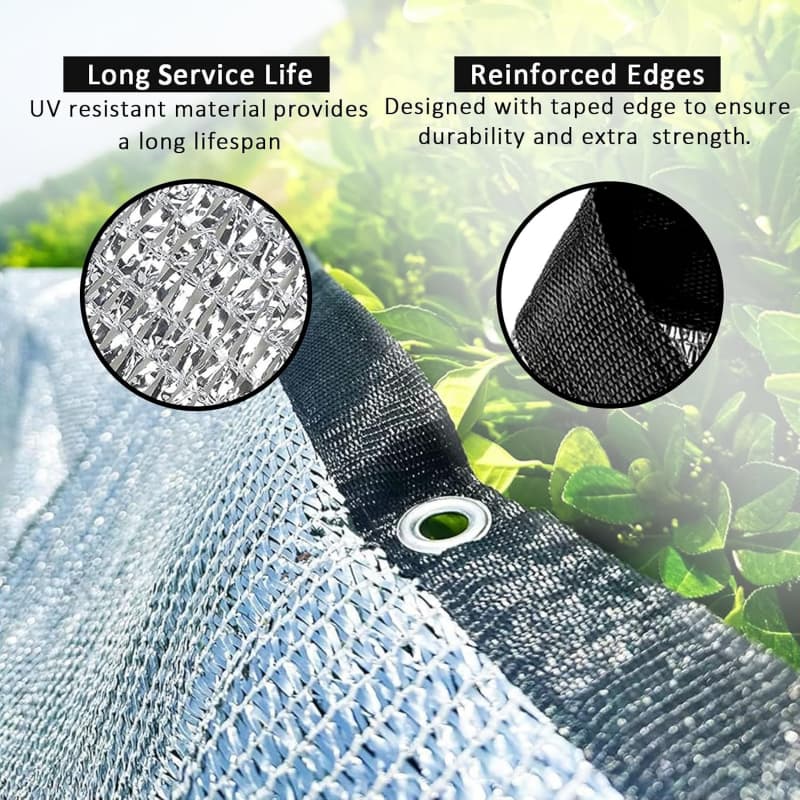
Metal Aluminum Shade Net Constructed with UV-stabilized HDPE base woven with high-purity aluminum foil strips, it adopts a physical heat reflection principle. Instead of trapping heat, it bounces off infrared radiation and UV rays from the sun. It reduces ground and air temperature directly while maintaining smooth air circulation, creating a visibly cooler microclimate under the net.
2. Cooling & Lighting Effect: Cooler Space & Soft Diffused Light
Plastic shade nets produce thick, dark shadows. Excessive shaded areas may cause insufficient light for plants, slow growth, or leggy seedlings. Meanwhile, the accumulated residual heat often leads to high temperature and high humidity under the net, triggering plant diseases and heat stress in livestock.
Metal aluminum shade nets deliver uniform diffused light. The metallic aluminum layer softens harsh direct sunlight without blocking essential photosynthetic light. It can lower the under-net temperature by 5–12°C compared with ordinary plastic nets, effectively preventing leaf burn, crop sunscald, and heat exhaustion for poultry and livestock. This unique advantage makes it the preferred shading material for high-value greenhouses and commercial planting bases.
3. Durability & Weather Resistance: Long-Term Outdoor Stability
Outdoor shading products face long-term exposure to strong UV rays, rain, and wind, so anti-aging performance is critical.
Ordinary plastic shade nets have a short service life. After 1–2 years of continuous sun exposure, plastic fibers gradually become brittle, fade, and tear easily. Their UV resistance drops sharply over time, requiring frequent replacement and increasing overall project costs.
Metal aluminum shade nets feature excellent weather resistance. The woven aluminum structure is anti-oxidation and corrosion-resistant, with added UV stabilizers in the base material. It resists aging, fading, and tearing in extreme hot, rainy, and windy environments. With a service life 2–3 times longer than ordinary plastic nets, it greatly reduces maintenance and replacement frequency for long-term outdoor projects.
4. Ventilation & Moisture Control: No Stuffy & Humid Environment
Good shading must be paired with breathable performance, especially for agricultural planting and livestock breeding scenarios.
Traditional thick plastic shade nets easily cause poor air convection. Heat and moisture accumulate under the net, forming a stuffy and humid environment that breeds bacteria and molds, endangering plant and animal health.
The open knitted mesh structure of aluminum shade nets ensures unobstructed cross-ventilation. Hot air and moisture can dissipate freely, avoiding dampness and stuffiness. It maintains a dry, cool, and ventilated under-net environment all year round.
5. Seasonal Adaptability: All-Weather Multifunctional Use
Ordinary plastic shade nets are single-functional, only suitable for summer sun shading. They cannot adapt to low-temperature environments and have no heat preservation effect at night.
Metal aluminum shade nets support four-season use. In summer, it reflects solar heat for cooling and sun protection; in autumn and winter, it effectively reduces indoor heat loss, playing a certain heat preservation and anti-frost effect. This all-weather performance makes it ideal for perennial greenhouses, fixed patio shading, and long-term construction site protection.
6. Cost Performance: Low Initial Cost vs Low Long-Term Cost
Ordinary plastic shade nets have a low upfront price, suitable for short-term temporary shading (within 1 year). However, frequent replacement and maintenance lead to higher comprehensive costs in the long run.
Metal aluminum shade nets have a slightly higher initial investment, but their ultra-long service life and stable performance eliminate frequent replacement costs. For commercial farms, large greenhouses, engineering projects, and permanent outdoor shading, it delivers higher long-term cost performance.
Quick Comparison Table: Aluminum Shade Net vs Plastic Shade Net
Item
Ordinary Plastic Shade Net
Metal Aluminum Shade Net
Working Principle
Light absorption & physical shading
Heat reflection & UV blocking
Cooling Effect
Weak, easy heat accumulation
Strong, 5–12°C temperature drop
Light Quality
Hard dark shadow
Soft diffused light
Service Life
1–2 years (easy aging)
3–5+ years (anti-aging)
Ventilation
Poor, easy stuffy
Excellent, breathable & dry
Best Application
Short-term temporary shading
Agriculture, outdoor permanent shading, engineering
Final Verdict: Which One Should You Choose?
Choose Ordinary Plastic Shade Net If: You only need temporary shading for a few months, with low budget requirements and no long-term use demand.
Choose Metal Aluminum Shade Net If: You need stable cooling effect, plant protection, long-term outdoor use, and lower comprehensive maintenance costs. It is the best upgrade solution for greenhouses, livestock sheds, villa patios, carports, and construction projects.
Conclusion
The core upgrade from plastic shade net to metal aluminum shade net is from simple "light blocking" to professional "intelligent temperature control shading". With superior cooling performance, longer service life, and better crop/livestock protection effects, aluminum reflective shade nets are gradually becoming the mainstream choice for global commercial and high-end outdoor shading.
If you are looking for high-quality, customizable metal aluminum shade nets with multiple shade rates and sizes, contact us for wholesale pricing and professional shading solutions!
Read More


 IPv6 network supported




 English
 español