Black HDPE Shade Net: Busting Heat Myths & The Ultimate Multi-scenario Shading Solution
Oct 16, 2026
When buyers compare shade net options, one question always comes up: Will black shade net trap heat and make the space below hotter?
This persistent misunderstanding stops many growers, contractors and distributors from picking black shade mesh — even though it remains the world’s most popular, cost-effective shading material for agriculture, construction and residential outdoor shading.
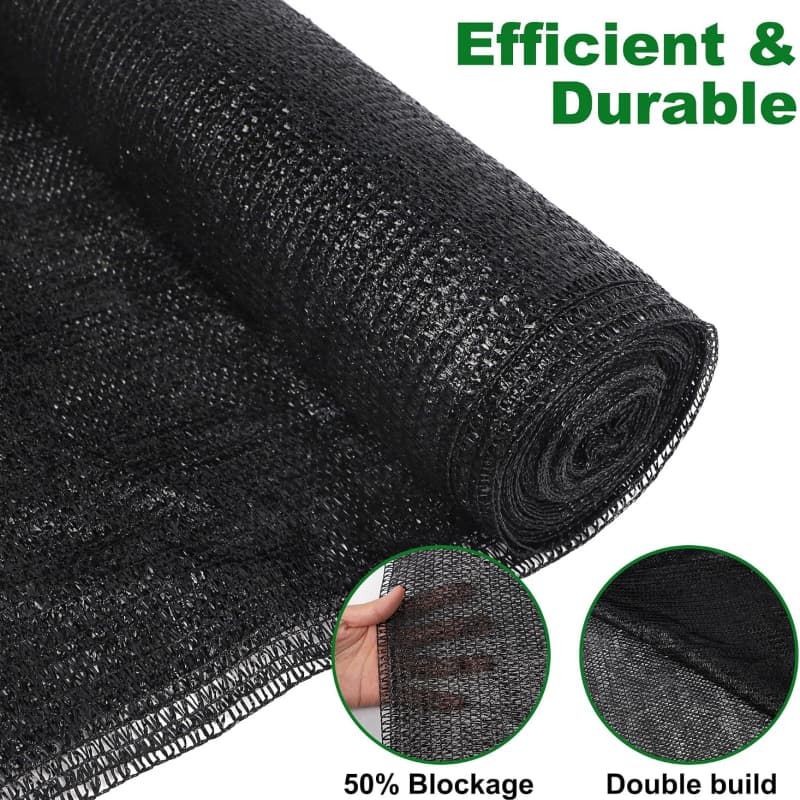
Black HDPE shade net, also called black sun shade net or black shade cloth, delivers balanced UV blocking, uniform light diffusion and extra privacy. Made from knitted virgin HDPE yarn mixed with UV stabilizers, it is engineered to handle year-round harsh outdoor exposure. In this guide, we break down its real performance, use cases, shade rate selection and key buying tips for global buyers.
Why Black Shade Net Is Different: The Heat Myth Explained
Black fibers absorb solar radiation mostly on the surface of the net itself, rather than letting scorching direct sunlight penetrate down to crops, livestock or work zones. Thanks to its open knitted mesh structure, air and rain can freely flow through the holes. Hot air will dissipate quickly instead of accumulating under the cover.
That said, it is important to understand its strength:
Blocks harmful UVA & UVB rays evenly
Creates soft diffused light for plants
Delivers privacy screening besides sun shading
Consistent shading rate across the whole roll
For tropical, high-UV regions, black shade net is widely trusted for nurseries, livestock shading and construction dust control. For extreme hot climate greenhouse projects, buyers can evaluate between black and aluminet shade net based on crop requirements.
Core Advantages of Our Black HDPE Shade Net
Long-Lasting UV Stabilized Virgin HDPE Material UV additives are blended into yarn during extrusion, not just sprayed on the surface. This avoids peeling or fast aging. Under normal outdoor conditions, service life reaches 5–8 years, resistant to strong sun, rain and wind. Raschel knitted structure prevents small tears from spreading quickly.
Wide Range of Custom Shade Rates Available from 30% up to 90% shade density. We can customize width from 1m to 12m and unlimited roll lengths. Optional reinforced stitching, bound edges and rust-proof metal grommets for fast installation on large spans. OEM logo printing is available for bulk orders.
Lightweight, Breathable & Water Permeable Rainwater drains through without pooling on top. Air circulation reduces mold risk for plants. It is flexible and foldable for simple transport, storage and repeated installation.
Multi-functional for 4 Major Markets One black shade net serves multiple verticals, perfect for wholesalers to expand product portfolio.
How To Choose The Right Shade Percentage
30%–40%: Tomatoes, peppers and other fruiting vegetables. Reduces sunburn without cutting down too much sunlight needed for yield.
50%: General farm, vegetable beds, livestock cooling cover. Balanced choice for most growers.
60%–70%: Seedlings, flowers, sensitive nursery plants. Protect tender foliage from leaf scorch.
80%–90%: Construction dust control, privacy screening, carport shading, animal pens, waste material covering.
Common Applications of Black Shade Net
Agriculture & Horticulture Greenhouse roof shading, seedling nursery, orchard, vegetable farms, livestock cooling cover for poultry, cattle and sheep pens.
Residential Outdoor Patio, pergola, backyard privacy screen, carport sun protection, swimming pool surrounding shading.
Construction & Industrial Scaffolding shade, site dust suppression, temporary privacy fence, outdoor material protection cover.
FAQ
Q1: Should I pick black, green or silver shade net?
Black gives consistent light filtering and the best privacy at competitive pricing. Silver/aluminet reflects heat and works best for ultra-hot commercial greenhouses. Green is more for garden aesthetic.
Q2: What’s the difference between knitted and woven shade net?
Raschel knitted shade net is tear-resistant and widely used for outdoor shading. Woven net is stiffer, less flexible and more often for heavy duty industrial covering. Our black shade net uses knitted construction.
Q3: How to install black shade net properly?
Leave a small air gap between net and the surface below. Good airflow will maximise cooling performance. Use grommets and cable ties to fix it loosely, avoid over-tensioning in hot weather.
Q4: Can I get samples before bulk purchase?
Yes. We provide small swatch samples for quality testing; buyers only cover courier freight. Flexible MOQ and factory wholesale pricing for distributors and project contractors.
Conclusion
Black HDPE shade net remains a reliable, versatile shading solution for global buyers. It is not just a cheap sun cover; it is a climate management tool for crops, a privacy barrier for construction sites and a simple cooling solution for outdoor living spaces.
The key is selecting the correct shade rate, GSM and edge finishing according to local climate and project type. If you are a distributor, farm owner or construction contractor looking for bulk black shade net with custom specifications, contact our team today for wholesale quotation and sample support.
Read More


 IPv6 network supported





 English
 español