HDPE Shade Sail Two Shade Sail Solutions For Different Outdoor Project Goals
Oct 14, 2026
Introduction
Outdoor shading is rarely one-size-fits-all. Many buyers start searching for shade sails thinking there is just one standard type, only to discover there are two high-performance routes: breathable HDPE shade sail and waterproof shade sail.
We manufacture both styles. Neither is universally “better”. The right choice depends entirely on what experience you want to create under the sail.
Breathable HDPE mesh excels when your top priority is natural airflow and UV cooling. Our waterproof shade sail shines when you want a dry outdoor zone that blocks both sun and rain. This guide breaks down the engineering, use cases, and sourcing tips so contractors, distributors and property owners can match fabric to project requirements.
What Makes HDPE Shade Sail Unique
HDPE shade sail is constructed from knitted high-density polyethylene mesh, blended with UV stabilised virgin resin. The open-knit structure is its defining feature.
Blocks 85%–95% of harmful UV rays
Air and hot wind pass freely through the mesh, lowering temperatures beneath the shade
Rainwater drains through the fabric, eliminating standing water and pooling risk
Lightweight, reduces load on mounting posts and anchor hardware
Wind can flow through the fabric, lowering “parachute effect” during gusty weather
Anti-fade, anti-mildew and rot-resistant for year-round outdoor exposure
Available in 200–380 GSM with custom sizes, shapes and colours
This design is built for comfort first. Even on sweltering sunny days, air continues to circulate, so shaded spaces do not feel trapped and stuffy.
Key note: HDPE knitted mesh is breathable and UV protective. It is not designed to stop rain. If you need to keep people, furniture or equipment fully dry during showers, our waterproof shade sail is the recommended option.
Waterproof Shade Sail Designed For Dry Outdoor Zones
Our waterproof shade sail uses coated solid fabric with sealed seams to repel rain while also delivering strong UV protection. It serves a separate, equally important purpose.
Blocks UV radiation and keeps the area underneath fully dry during light and moderate rain
Creates an all-weather outdoor living or working space usable in sunny and wet conditions
Fabric surface is tightly constructed; installation requires proper slope and strong anchoring
With correct tension and drainage design, it is ideal for outdoor dining, event areas and equipment protection
Waterproof shade sails are excellent when rain protection is a core requirement. The trade-off is less natural airflow through the fabric, so installation design should account for ventilation.
Side by Side Comparison HDPE vs Waterproof Shade Sail
Feature
HDPE Breathable Shade Sail
Waterproof Shade Sail
Core Strength
Airflow & heat reduction, wind permeable
Keep area dry against rain + UV block
Water Behaviour
Rain passes through mesh
Rain repelled, requires slope for runoff
Wind Performance
Wind flows through mesh, less stress on anchors
Wind pushes against solid fabric; robust mounting needed
Best Climate Fit
Hot, sunny, windy locations
Areas with frequent rain, where dry space is required
Primary Projects
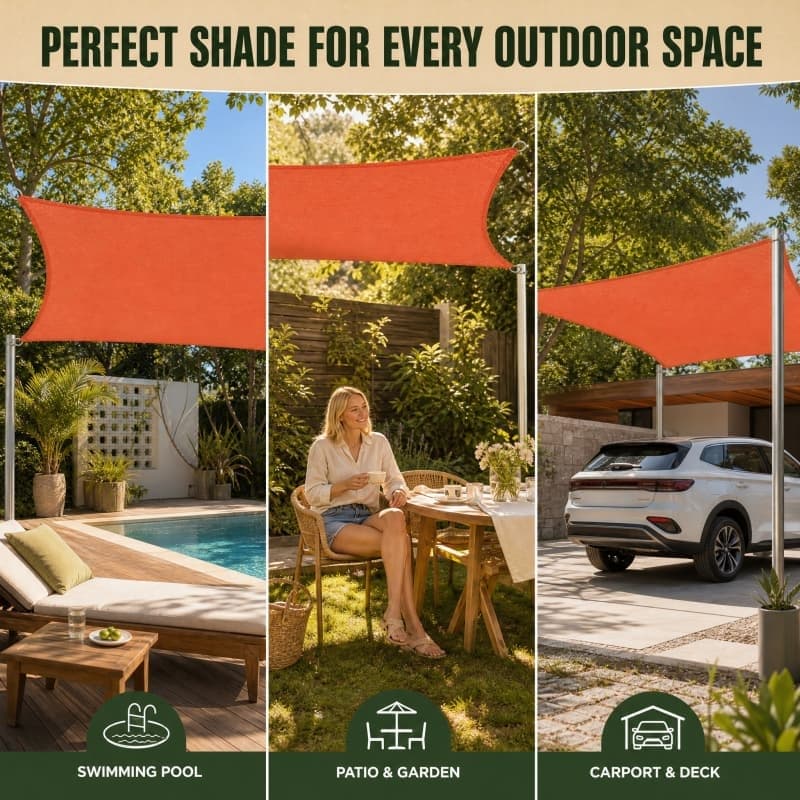
Pool decks, playgrounds, carports, park walkways, garden patios
Cafe outdoor seating, event zones, equipment cover, covered terraces
How To Pick Between The Two For Your Project
Choose HDPE Shade Sail if these are your priorities
Keep shaded areas cool with natural ventilation
Reduce wind load on posts and fixings
Avoid risks of water pooling
Long-term shading for playgrounds, pools, car parking and public parks
Low maintenance, simple installation
Choose Waterproof Shade Sail if these are your priorities
Need usable dry space in rainy weather
Protect furniture, equipment or guests from both sun and rain
Outdoor restaurant seating, permanent event spaces or storage shelters
Many of our clients even combine both types on one site: HDPE sails over pool and walkways, waterproof sails over dining zones. This hybrid design balances cooling and rain shelter in a single landscape project.
4 Sourcing Tips For Bulk Buyers & Contractors
1. Check GSM for HDPE shade sail
GSM defines fabric tensile strength. 200–240 GSM works well for mild residential projects. Windy commercial and public installations need 280–380 GSM heavy-duty HDPE mesh.
2. Always confirm corner reinforcement
Sails usually fail at corners, not fabric. Premium versions include folded reinforced edges and marine-grade stainless D-rings to handle constant tension.
3. Reserve length for tension
Both sail styles require tension. Never order the exact distance between anchor points; leave allowance for turnbuckles and adjustment to prevent sagging.
4. Virgin resin matters for long UV life
Select sails made with virgin UV-stabilized HDPE or coated fabric. Recycled materials can lose UV resistance and fade faster under continuous outdoor exposure.
Installation Best Practices For Longer Service Life
For HDPE shade sail
Mount anchors to solid load-bearing structures
Apply even tension to all corners to minimise flapping in wind
Hose clean when needed; no harsh chemicals required
For waterproof shade sail
Install with sufficient slope to channel rainwater off the surface
Use heavy-duty posts and hardware to handle wind pressure on solid fabric
Inspect seams periodically to maintain waterproof integrity
Final Thoughts
There is no universal “best” shade sail, only the best fit for your project.
HDPE knitted shade sail brings breathable cooling and wind-friendly performance for sunny outdoor spaces. Our waterproof shade sail delivers reliable rain protection when you need dry, usable outdoor areas. As a manufacturer supplying both versions, we help distributors and contractors select, customise and order the right shade solution, with OEM and ODM available for custom sizes, shapes and colours.
Contact our sales team to share your site conditions and project goals. We will recommend HDPE shade sail, waterproof shade sail or a mixed layout for your next shading project.
FAQ
Q: What is the main difference between HDPE shade sail and waterproof shade sail?
A: HDPE shade sail uses open knitted mesh for airflow and UV protection, rain passes through. Waterproof shade sail uses coated fabric with sealed seams to block rain, creating dry outdoor shelter. We produce both types.
Q: Can I use HDPE shade sail over a restaurant patio?
A: Yes, if cooling and airflow are your priority. If you need guests to stay dry during rain, our waterproof shade sail is a better choice for dining areas.
Q: Are custom sizes available for both products?
A: Yes. We offer OEM and ODM service for HDPE breathable shade sail and waterproof shade sail, including custom shapes, dimensions and colours for bulk wholesale orders.
Q: Which one handles strong wind better?
A: HDPE mesh lets wind pass through, lowering pressure on anchors. Waterproof shade sail catches wind, so it requires stronger support structures and careful installation.
Read More


 IPv6 network supported




 English
 español