Choosing HDPE Shade Nets by Shade Rate: Applications & Tips
Sep 17, 2026
HDPE (High-Density Polyethylene) shade nets are one of the most versatile, durable, and cost-effective outdoor protection materials worldwide. Featuring excellent UV resistance, high tensile strength, breathable structure, and long service life, they are widely used in agricultural planting, livestock farming, residential outdoor shading, aquaculture, construction dust control, and industrial material protection.
Most buyers make a common mistake: choosing shade nets by price instead of shade percentage. The shade rate directly determines sunlight blocking, temperature reduction, light transmission, and ventilation effects. A mismatched shade rate will lead to stunted crop growth, plant sunburn, stuffy breeding environments, or insufficient cooling effects.
In this complete guide, we categorize HDPE shade nets by low, medium, and high shade rates, explaining their core features, applicable scenarios, and professional usage tips to help you pick the perfect shade net for your project.
1. Low Shade Rate (25%–40%): Soft Light Protection for Sun-Loving Plants & Mild Shading
Low-density shade nets block only 25% to 40% of direct sunlight and harmful UV rays, retaining sufficient natural scattered light while avoiding intense solar radiation. With superior air permeability and minimal temperature blocking, they create a cool and well-lit environment, ideal for light-demanding crops and gentle outdoor shading.
Best Application Scenarios
Crop Seedling Nursery: Perfect for vegetable seedlings, melon sprouts, and field crop seedlings. Prevents leaf scorch and seedling wilting under midday harsh sun while ensuring enough photosynthetic light to improve survival rates and promote robust growth.
Sun-Loving Flowers & Plants: Suitable for roses, sunflowers, bougainvilleas, and other heliophytes. Avoids petal browning and leaf yellowing caused by extreme sunlight without restricting plant growth.
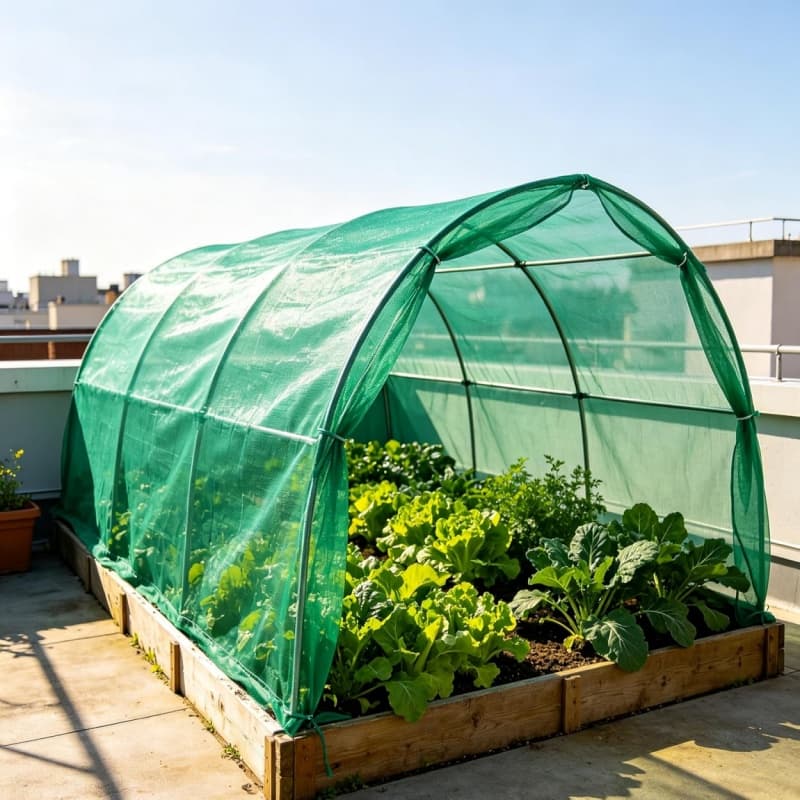
Residential Garden & Balcony Shading: Ideal for open-air vegetable gardens, small courtyards, and balcony plant areas. Softens strong glare, slightly lowers ambient temperature, and keeps outdoor spaces bright and breathable.
Core Advantage: Protects plants without blocking essential sunlight, the best choice for daily maintenance of sun-exposed vegetation.
2. Medium Shade Rate (50%–75%): All-Rounder for Agriculture, Livestock & Outdoor Living
The 50%–75% shade range is the most universal and practical specification for global users. It balances efficient cooling, UV blocking, and proper light transmission, reducing ambient temperature by 5–8°C in hot summer while maintaining a non-stuffy, well-ventilated environment. This multi-functional shade rate fits most commercial and residential scenarios.
Best Application Scenarios
Greenhouse & Horticulture Planting: Perfect for leafy vegetables, mature melon and fruit crops, and ornamental seedlings. Prevents high-temperature stress that causes flower and fruit drop, stabilizes crop yield, and adapts to most greenhouse planting environments.
Partial Shade Plants: Suitable for pothos, dracaena, bonsai, and landscape nursery plants that prefer diffused light. Blocks intense sunlight to avoid leaf drying and sunscald.
Outdoor Leisure Spaces: Widely used for patio shading, pergola coverings, backyard canopies, and swimming pool areas. Delivers comfortable cooling without dim lighting, creating a pleasant outdoor living environment.
Livestock Farming: Ideal for cattle, horse, and general poultry sheds. Reduces heat stress for livestock in hot weather, ensures good ventilation, and avoids excessive humidity inside the breeding house.
Household & Commercial Protection: Shades outdoor furniture, parking areas, and outdoor equipment to delay aging caused by long-term UV exposure.
Core Advantage: A cost-effective all-round option with zero scenario limitations, suitable for 80% of agricultural, residential, and small commercial shading needs.
3. High Shade Rate (80%–95%): Maximum Shading for Specialized Farming & Industrial Protection
High-density HDPE shade nets block 80% to 95% of sunlight and ultraviolet rays, providing extreme cooling, full shading, and dust insulation. With low light transmittance, they are not suitable for common green plants but designed for specialized low-light farming, aquaculture, and industrial shielding scenarios.
Best Application Scenarios
Mushroom & Fungi Cultivation: Completely adapts to the low-light and humid growth habits of oyster mushrooms, shiitake mushrooms, and button mushrooms, boosting yield and quality effectively.
Aquaculture Protection: Covers fish ponds, shrimp ponds, and turtle breeding pools. Stabilizes water temperature, inhibits moss overgrowth, prevents water quality deterioration caused by direct sunlight, and reduces aquatic product mortality.
Shade-Loving Special Plants: Perfect for succulents like Haworthia, ferns, hostas, and other shade-dependent plants, preventing sunburn, fading, and withering.
Construction & Industrial Use: Widely used for construction soil covering, material yard dust control, warehouse shading, and outdoor equipment shielding. Provides excellent dust-proof, sun-proof, and aging-resistant effects.
Large-Scale Livestock Farms: Creates fully shaded and low-temperature environments for intensive poultry and livestock breeding, eliminating heatstroke risks in extreme summer heat.
Core Advantage: Professional extreme shading and dust-proof solution for special industries and low-light growth environments.
Quick Reference Chart: Shade Rate vs Suitable Scenarios
Shade Rate
Key Features
Ideal Applications
25%–40%
High light transmission, mild cooling, excellent ventilation
Seedling nursery, sun-loving flowers, garden mild shading
50%–75%
Balanced shading & lighting, obvious cooling, versatile
Greenhouse planting, patio shading, livestock sheds, nursery stock protection
80%–95%
Maximum shading, extreme cooling, dust insulation
Fungi cultivation, aquaculture, construction dust control, industrial covering
Professional Tips for Buying & Using HDPE Shade Nets
1. Avoid blind high-shade selection
Excessively high shade rates cause insufficient light, poor ventilation, and humid environments, leading to plant overgrowth, root rot, and pest infestations for common crops and gardens.
2. Choose virgin HDPE material
New-grade HDPE nets feature enhanced UV resistance and anti-aging performance, with a service life of 3–8 years. Recycled material nets are fragile, uneven in shading, and prone to cracking under sun exposure.
3. Adjust according to climate
Select relatively higher shade rates for tropical and strong sunlight areas; choose low-to-medium shade rates for temperate regions with mild sunlight.
4. Prioritize breathable installation
Reserve gaps during installation to ensure air circulation. The core of shading is cooling without stuffiness, which maximizes the protective effect of HDPE shade nets.
Final Summary
The key to choosing an HDPE shade net is matching the shade percentage to your actual scenario. Pick 25%–40% for seedling and sun-loving plant protection, 50%–75% for universal agriculture, livestock, and outdoor shading, and 80%–95% for specialized low-light farming and industrial shielding.
With the right shade rate, HDPE shade nets can deliver stable UV protection, temperature reduction, and dust control, bringing long-term value for agricultural production, residential life, and industrial projects.
Read More


 IPv6 network supported




 English
 español