Aluminum Shade Net vs Regular HDPE Shade Net: How to Pick the Right Shade Mesh for Your Project
Oct 20, 2026
Introduction
When planning outdoor shading for greenhouses, patios, livestock barns or construction sites, shade net is one of the most cost-effective solutions. Two mainstream options dominate the market: aluminum reflective shade net and regular HDPE shade net.
A common misunderstanding is that one type is universally “better”. In reality, each works on a different physical principle and fits distinct project priorities. We supply both aluminum shade net and standard HDPE shade net. Our goal here is to lay out factual differences, so distributors, farmers and contractors can select based on climate, crop type, budget and expected service life.
How They Work: Core Principle Difference
Regular HDPE Shade Net
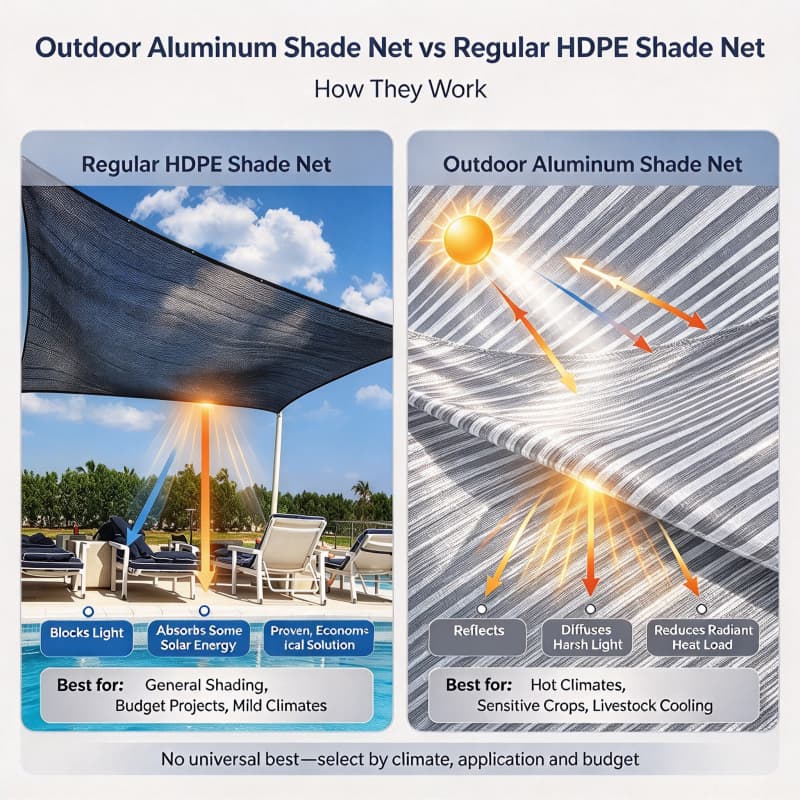
Standard shade net is knitted from HDPE yarn mixed with UV stabilizers. It works by absorbing sunlight and blocking a set percentage of light. The fabric absorbs solar energy and releases part of that heat into the space underneath. It is a mature, proven shading solution widely used globally for decades.
Outdoor Aluminum Shade Net
Aluminum shade net uses UV-stabilized HDPE base mesh bonded with aluminum reflective filaments. Instead of absorbing solar heat, it reflects infrared radiant heat and UV back to the atmosphere. It still filters light, but creates a cooler microclimate by reducing radiant heat load, while diffusing harsh direct sunlight into soft, even light. It also offers mild heat retention overnight in greenhouse applications.
Side-by-Side Comparison Table
Comparison Item
Regular HDPE Shade Net
Outdoor Aluminum Shade Net
Working Mechanism
Absorbs sunlight to block light; some heat re-radiates downward
Reflects infrared & UV radiation; diffuses incoming light
Cooling Performance
Provides shade; temperature drop is limited
Superior radiant heat reduction; noticeably cooler under the net under strong sun
Light Quality
Creates sharp shadows; light distribution less uniform
Soft diffused light; fewer hot spots, better for sensitive crops
Material & Structure
Pure HDPE knitted mesh
HDPE base + aluminum reflective coating/filaments
Upfront Cost
Lower
Higher
Service Life
Good with virgin HDPE and UV additives
Long service life in hot high-radiation areas; aluminum layer needs protection from heavy abrasion
Night Thermal Performance
No thermal retention
Minor heat retention for greenhouse overnight
Best Fit
Temporary shading, low-budget projects, mild climates, general shading
Hot climates, temperature-sensitive crops, livestock cooling, premium patio & long-term commercial shading
Benefits & Limitations of Regular HDPE Shade Net
Strengths
Budget-friendly for large-area or short-term shading projects
Simple product with stable supply and easy installation
Wide range of shade rates and colors (black, white, green)
Good tensile strength and wind resistance for general use
Easy to cut, re-use and store for seasonal jobs
Limitations
Absorbs heat, so under-canopy temperature rises more in extreme heat
Creates concentrated shadow areas, may cause sunscald on delicate crops
Benefits & Limitations of Outdoor Aluminum Shade Net
Strengths
Reflective cooling: same shade rate delivers stronger temperature reduction in intense sunlight
Even diffused light reduces hot spots and crop sunburn
Blocks UV while maintaining airflow
Dual function: daytime cooling + slight night heat preservation for greenhouses
Ideal for high-value crops, animal heat stress relief and residential patio comfort
Limitations
Higher initial investment compared with standard HDPE shade net
Aluminum reflective surface can wear if subject to heavy friction or sharp abrasion
Metallic silver appearance may not fit every landscape aesthetic preference
How to Choose: When to Pick Which
Choose Regular HDPE Shade Net if:
You have a tight budget or temporary shading (construction covering, seasonal event shading)
Your local climate has mild summers without prolonged extreme heat
You need simple light blocking for hardy plants, general farm coverage
Large area coverage where upfront cost is the primary deciding factor
Choose Outdoor Aluminum Shade Net if:
Projects located in hot, high UV regions where radiant heat is a major concern
Greenhouse cultivation for sensitive, high-value crops (nursery seedlings, flowers, berries)
Livestock barns, poultry houses to reduce heat stress and protect animal productivity
Residential pergolas, carports, pool areas where human comfort is key
Long-term fixed installations, and you want to lower ongoing crop/asset heat damage
Frequently Asked Questions
Q1: For the same shade percentage, will aluminum shade net always be cooler?
A1: Yes for radiant heat. Under strong direct sunlight, aluminum shade net delivers better cooling effect. But airflow, installation gap and local weather also affect the final temperature. Regular HDPE shade net still works reliably for basic shading.
Q2: Can I mix the two types in one greenhouse project?
A2: Absolutely. Many clients combine them: use aluminum shade net for sensitive crop zones and standard HDPE shade net for outer roof or low-priority areas to balance performance and budget.
Q3: Are both products customizable?
A3: Yes. We supply custom width, length, shade rate, reinforced edges and grommet options for both regular HDPE shade net and aluminum shade net.
Q4: What about wind resistance?
A4: Both are breathable knitted mesh and suitable for outdoor wind conditions. Proper tension and mounting are critical regardless of the shade net type you select.
Conclusion
There is no universal “best” shade net, only the most suitable one for your specific project. Regular HDPE shade net remains a practical, economical staple for most standard shading needs. Aluminum shade net is a performance upgrade, designed specifically for hot climates and applications where precise temperature control matters.
We carry both product lines. Share your location, application, shade rate requirement and budget, and our team can recommend the optimal mesh solution for wholesale or project orders.
Read More


 IPv6 network supported





 English
 español