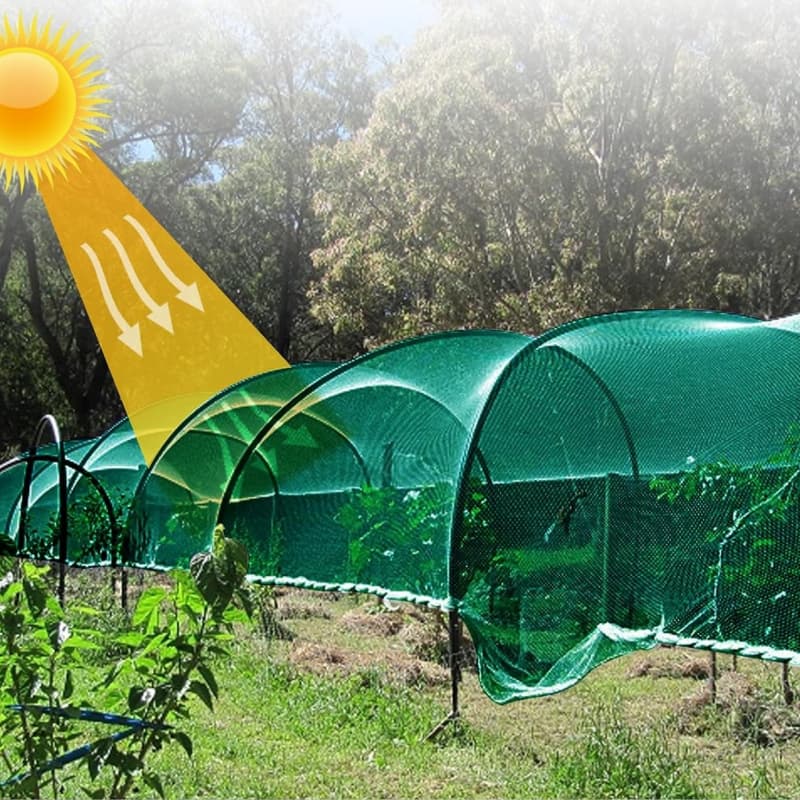
Enter product details (such as color, size, materials etc.) and other specific requirements to receive an accurate quote.

leave a message

If you are interested in our products and want to know more details,please leave a message here,we will reply you as soon as we can.
Submit
other

Blog

Home Blogs

Blog

  • HDPE Shade Sail Two Shade Sail Solutions For Different Outdoor Project Goals
    HDPE Shade Sail Two Shade Sail Solutions For Different Outdoor Project Goals
    Oct 14, 2026
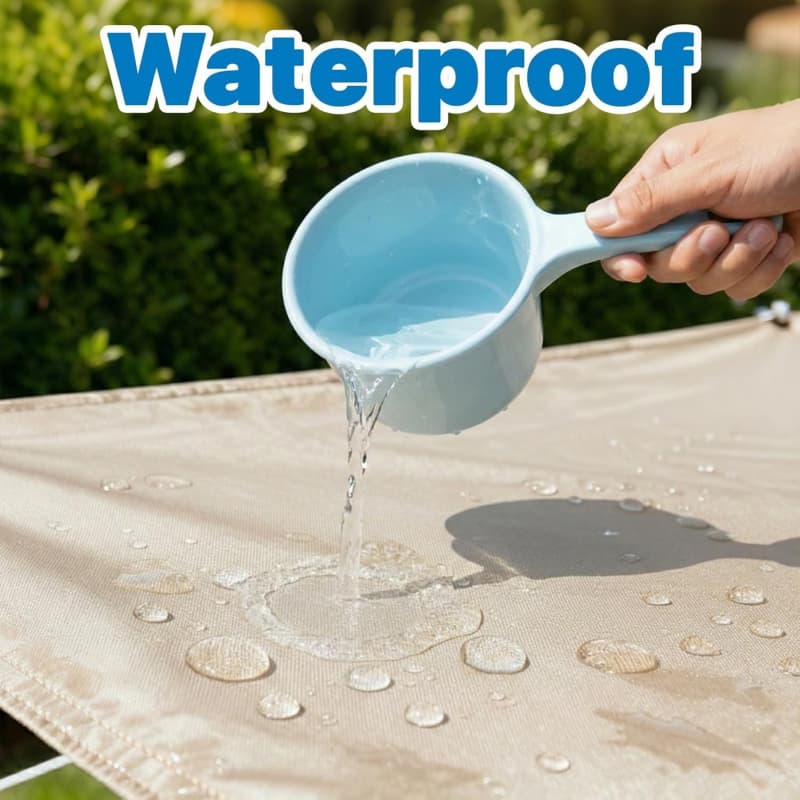
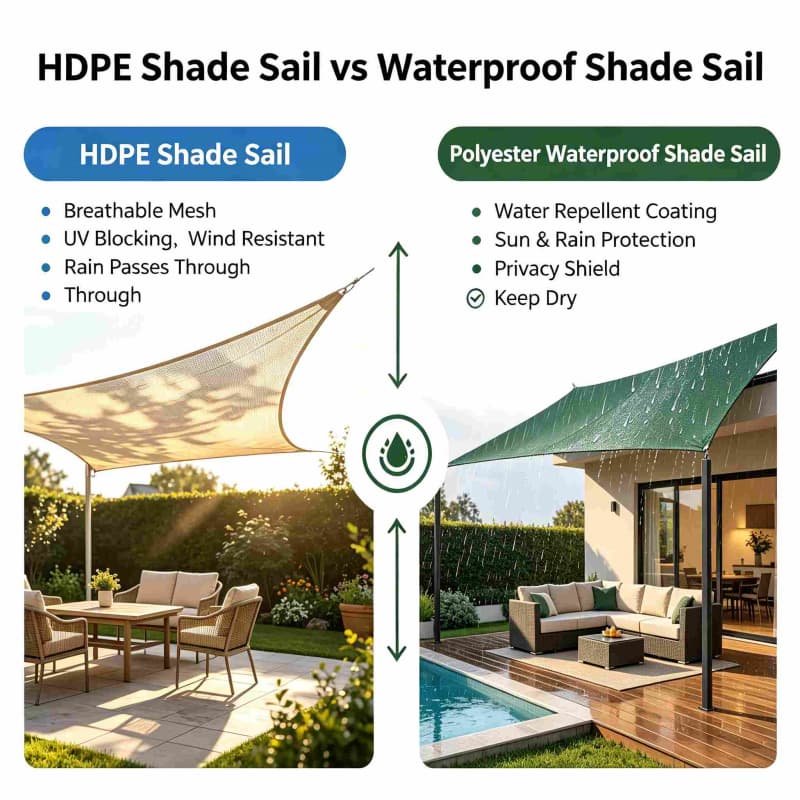
    Introduction   Outdoor shading is rarely one-size-fits-all. Many buyers start searching for shade sails thinking there is just one standard type, only to discover there are two high-performance routes: breathable HDPE shade sail and waterproof shade sail. We manufacture both styles. Neither is universally “better”. The right choice depends entirely on what experience you want to create under the sail. Breathable HDPE mesh excels when your top priority is natural airflow and UV cooling. Our waterproof shade sail shines when you want a dry outdoor zone that blocks both sun and rain. This guide breaks down the engineering, use cases, and sourcing tips so contractors, distributors and property owners can match fabric to project requirements.   What Makes HDPE Shade Sail Unique   HDPE shade sail is constructed from knitted high-density polyethylene mesh, blended with UV stabilised virgin resin. The open-knit structure is its defining feature.   Blocks 85%–95% of harmful UV rays   Air and hot wind pass freely through the mesh, lowering temperatures beneath the shade   Rainwater drains through the fabric, eliminating standing water and pooling risk   Lightweight, reduces load on mounting posts and anchor hardware   Wind can flow through the fabric, lowering “parachute effect” during gusty weather   Anti-fade, anti-mildew and rot-resistant for year-round outdoor exposure   Available in 200–380 GSM with custom sizes, shapes and colours   This design is built for comfort first. Even on sweltering sunny days, air continues to circulate, so shaded spaces do not feel trapped and stuffy.   Key note: HDPE knitted mesh is breathable and UV protective. It is not designed to stop rain. If you need to keep people, furniture or equipment fully dry during showers, our waterproof shade sail is the recommended option.   Waterproof Shade Sail Designed For Dry Outdoor Zones   Our waterproof shade sail uses coated solid fabric with sealed seams to repel rain while also delivering strong UV protection. It serves a separate, equally important purpose.   Blocks UV radiation and keeps the area underneath fully dry during light and moderate rain   Creates an all-weather outdoor living or working space usable in sunny and wet conditions   Fabric surface is tightly constructed; installation requires proper slope and strong anchoring   With correct tension and drainage design, it is ideal for outdoor dining, event areas and equipment protection   Waterproof shade sails are excellent when rain protection is a core requirement. The trade-off is less natural airflow through the fabric, so installation design should account for ventilation.   Side by Side Comparison HDPE vs Waterproof Shade Sail   Feature HDPE Breathable Shade Sail Waterproof Shade Sail Core Strength Airflow & heat reduction, wind permeable Keep area dry against rain + UV block Water Behaviour Rain passes through mesh Rain repelled, requires slope for runoff Wind Performance Wind flows through mesh, less stress on anchors Wind pushes against solid fabric; robust mounting needed Best Climate Fit Hot, sunny, windy locations Areas with frequent rain, where dry space is required Primary Projects Pool decks, playgrounds, carports, park walkways, garden patios Cafe outdoor seating, event zones, equipment cover, covered terraces   How To Pick Between The Two For Your Project   Choose HDPE Shade Sail if these are your priorities   Keep shaded areas cool with natural ventilation   Reduce wind load on posts and fixings   Avoid risks of water pooling   Long-term shading for playgrounds, pools, car parking and public parks   Low maintenance, simple installation   Choose Waterproof Shade Sail if these are your priorities   Need usable dry space in rainy weather   Protect furniture, equipment or guests from both sun and rain   Outdoor restaurant seating, permanent event spaces or storage shelters   Many of our clients even combine both types on one site: HDPE sails over pool and walkways, waterproof sails over dining zones. This hybrid design balances cooling and rain shelter in a single landscape project.   4 Sourcing Tips For Bulk Buyers & Contractors   1. Check GSM for HDPE shade sail   GSM defines fabric tensile strength. 200–240 GSM works well for mild residential projects. Windy commercial and public installations need 280–380 GSM heavy-duty HDPE mesh.   2. Always confirm corner reinforcement   Sails usually fail at corners, not fabric. Premium versions include folded reinforced edges and marine-grade stainless D-rings to handle constant tension.   3. Reserve length for tension   Both sail styles require tension. Never order the exact distance between anchor points; leave allowance for turnbuckles and adjustment to prevent sagging.   4. Virgin resin matters for long UV life   Select sails made with virgin UV-stabilized HDPE or coated fabric. Recycled materials can lose UV resistance and fade faster under continuous outdoor exposure.   Installation Best Practices For Longer Service Life   For HDPE shade sail   Mount anchors to solid load-bearing structures   Apply even tension to all corners to minimise flapping in wind   Hose clean when needed; no harsh chemicals required   For waterproof shade sail   Install with sufficient slope to channel rainwater off the surface   Use heavy-duty posts and hardware to handle wind pressure on solid fabric   Inspect seams periodically to maintain waterproof integrity   Final Thoughts   There is no universal “best” shade sail, only the best fit for your project.   HDPE knitted shade sail brings breathable cooling and wind-friendly performance for sunny outdoor spaces. Our waterproof shade sail delivers reliable rain protection when you need dry, usable outdoor areas. As a manufacturer supplying both versions, we help distributors and contractors select, customise and order the right shade solution, with OEM and ODM available for custom sizes, shapes and colours.   Contact our sales team to share your site conditions and project goals. We will recommend HDPE shade sail, waterproof shade sail or a mixed layout for your next shading project.   FAQ    Q: What is the main difference between HDPE shade sail and waterproof shade sail? A: HDPE shade sail uses open knitted mesh for airflow and UV protection, rain passes through. Waterproof shade sail uses coated fabric with sealed seams to block rain, creating dry outdoor shelter. We produce both types.   Q: Can I use HDPE shade sail over a restaurant patio? A: Yes, if cooling and airflow are your priority. If you need guests to stay dry during rain, our waterproof shade sail is a better choice for dining areas.   Q: Are custom sizes available for both products? A: Yes. We offer OEM and ODM service for HDPE breathable shade sail and waterproof shade sail, including custom shapes, dimensions and colours for bulk wholesale orders.     Q: Which one handles strong wind better? A: HDPE mesh lets wind pass through, lowering pressure on anchors. Waterproof shade sail catches wind, so it requires stronger support structures and careful installation.
    Read More
  • The Humane Long-Term Solution to Guard Your Garden & Orchard From Bird Damage
    The Humane Long-Term Solution to Guard Your Garden & Orchard From Bird Damage
    Oct 13, 2026
    Intro   Every gardener and orchard owner knows the frustrating race against birds. You nurture ripening berries, plump peaches, tender vegetable seedlings, only to wake up and find fruit pecked, buds stripped, crops ruined overnight. Many people first try quick fixes: reflective scare tape, fake owls, ultrasonic repellers. But birds learn fast. Within days, those tricks stop working.   This is where anti bird net stands apart. Unlike deterrents that merely scare birds temporarily, anti bird net creates a physical, gentle barrier. It does not trap, injure or kill birds. It simply keeps them away from your plants. For both small backyard gardens and large commercial vineyards, it’s one of the most reliable, cost-effective bird control methods available.   Why Other Bird Deterrents Fail   Let’s break down the limitation of popular bird-scare methods:   Decoys & reflective tapes: Birds quickly realize they pose no real threat. Effectiveness drops sharply after 1–2 weeks.   Sonic / ultrasonic devices: Easily blocked by trees and walls; many birds become desensitized to the noise.   Bird spikes: Only work on flat ledges, cannot protect fruit trees or growing crops.   Poison or traps: Inhumane, illegal in many regions, and risks harm to bees, pets and other wildlife.   All these solutions target scaring birds. Anti bird net works differently: it separates birds from your harvest. No stress for birds, no constant maintenance for you.   What Makes HDPE Anti Bird Net The Smart Choice   Quality anti bird net is manufactured from virgin HDPE with UV stabilizers, designed to sit outdoors year-round.   Key advantages:   Humane exclusion: Fine mesh stops birds from reaching fruits and leaves, but birds cannot get tangled easily when installed properly.   UV-resistant: Long exposure under direct sunlight will not make the net brittle or tear quickly. Many options last multiple growing seasons.   Lightweight & flexible: Easy to drape over fruit trees, berry bushes, raised beds, or cover entire pond areas.   Customizable size: Cut to fit your garden layout without unraveling.   Multipurpose: Works for home gardens, commercial orchards, vineyards, greenhouse openings, koi ponds and building eaves.   Important note: Choose the correct mesh size. Smaller mesh prevents tiny birds such as sparrows from penetrating; larger mesh saves material cost for bigger birds like pigeons.   Installation Best Practices (Critical Tip Most Growers Miss)   A common mistake: Drape the net directly on top of branches and fruit. Birds can still stand on the net and peck through the mesh to reach your produce.   Proper installation method:   Build a simple frame or support above your plants to hold the net up. Leave a gap between netting and foliage.   Secure all edges firmly to the ground with stakes or cable ties. Close any gaps where birds might squeeze in.   Check for loose holes periodically after wind or heavy rain.   When the growing season ends, clean and fold the net for reuse next year.   With proper setup, one net can protect your crops for several years.   Who Should Use Anti Bird Net?   Backyard gardeners growing strawberries, blueberries, cherries and vegetables   Commercial orchard and vineyard farmers looking to reduce crop loss   Koi and pond owners to stop birds from eating fish   Greenhouse operators blocking birds from entering growing spaces   Homeowners who want to keep pigeons away from patio plants without harsh measures   FAQ   Q: Will anti bird net hurt birds? A: If installed correctly with support frames, it is a humane barrier. Avoid loose hanging nets that can entangle wildlife.   Q: Can I reuse the anti bird net year after year? A: Yes. UV-stabilized HDPE netting can be reused for multiple seasons if stored properly away from direct sunlight when not in use.   Q: Is anti bird net better than bird repellent spray? A: Repellent sprays wash off with rain and need repeated reapplication. Anti bird net provides permanent protection for the whole growing season.   Closing   Birds are part of nature, but your hard-earned harvest deserves protection. Anti bird net shifts the strategy from endless chasing and scaring to simple physical separation. It’s low-maintenance, eco-friendly, humane, and delivers consistent results season after season. If you are tired of temporary bird tricks that stop working, anti bird net is the investment that protects your garden reliably.    
    Read More
  • Anti Bird Net: The Humane, Multi-industry Barrier That Stops Bird Damage Without Harming Wildlife
    Anti Bird Net: The Humane, Multi-industry Barrier That Stops Bird Damage Without Harming Wildlife
    Oct 12, 2026
    Introduction   Farmers, aquaculture operators and solar asset managers all share one costly headache: bird damage. Birds peck ripening fruits, prey on fish fry, build nests under solar panels and leave corrosive droppings. Scare tapes, ultrasonic repellents and reflective devices only work for a short time. Birds quickly grow accustomed to these tricks and come back for more. Poison and sharp spikes bring ethical risks and may violate local wildlife regulations.   This is where premium anti bird net stands out. Instead of chasing birds away with noise or chemicals, it creates a stable, physical barrier. It keeps birds out of your valuable zones without trapping or injuring them. More than just orchard mesh, modern HDPE bird netting has expanded into aquaculture, solar energy and commercial building protection. It is a reusable, cost-effective long-term investment rather than a one-season fix.   Why HDPE Anti Bird Net Outperforms Traditional Bird Deterrents   Many buyers make the mistake of choosing cheap thin netting that cracks after one summer. Quality anti bird net is knitted from virgin HDPE monofilament mixed with UV stabilizers. It is engineered to handle harsh outdoor environments: strong sunlight, heavy rainfall, frost and coastal salt spray.   Key advantages   Humane exclusion design It blocks access, not birds themselves. Smooth filaments greatly reduce entanglement risk. No toxins, traps or sharp edges. This is critical for regions with strict bird protection laws.   Balanced airflow, light and water permeability Unlike solid plastic covers that overheat plants and trap moisture, knitted mesh lets sunlight, air and rainwater pass through. Fruit trees, berry bushes and vegetables continue photosynthesis normally, while mold and rot risk under the cover is reduced.   Reusable & foldable After harvest or maintenance season, simply remove, clean and fold the net for compact storage. A high-grade UV-treated net can serve 3–7 years outdoors, cutting annual replacement cost significantly.   Lightweight yet tear-resistant Easy to drape over tree canopies or stretch across support frames. It can be cut on-site with scissors for custom shapes, and the knitted structure minimizes fraying at cut edges. Optional flame retardant treatment is available for special industrial projects.   Wide Application: Not Only For Fruit Farms   Orchard & Vineyard Protection   Cherry, grape, blueberry, peach and strawberry crops suffer heavy yield loss from bird pecking. Drape anti bird net over tree canopies or build frame systems. It preserves harvest quality and reduces fruit waste.   Aquaculture Fish & Shrimp Ponds   Fish and shrimp farms lose large numbers of fry to diving birds. Bird droppings also contaminate pond water and increase disease risk. Covering ponds with anti bird net protects stock and stabilizes water quality.   Solar Panel Anti-bird Protection   Pigeons like nesting under solar arrays. Their droppings corrode frames and wiring, block sunlight and reduce power output. Anti bird net seals the perimeter under panels, prevents nesting and cuts expensive cleaning & repair work.   Greenhouse, Nursery & Home Garden   Protect young seedlings, leafy vegetables and potted plants. Small custom-cut rolls work well for residential gardens, terraces and landscape trees.   Commercial Buildings & Livestock Farms   Prevent birds from roosting under eaves, warehouses and barn roofs, reducing mess, hygiene issues and equipment corrosion.   How to Select The Right Mesh Size & GSM   Choosing the wrong mesh is one of the most common mistakes.   10×10 mm mesh: for small birds such as sparrows   15×15 mm mesh: universal option for mixed bird species   20–30 mm mesh: for pigeons and larger birds, widely used for solar panel projects   GSM refers to net weight. 30gsm–35gsm is the best-selling grade for regular seasonal farm use. Heavier 40–80gsm heavy-duty net is recommended for long-term permanent installation, windy coastal areas and solar sites.   Available colors: black, dark green and white. Black mesh is nearly invisible from distance; dark green blends naturally with orchard foliage.   Installation Best Practices   Anti bird net installation is simple but details decide the effect.   1.Set up support posts or frames so the net hangs above fruits and leaves. Never lay net directly on crops; birds can peck through mesh if they touch the fruit   2.Secure edges tightly with clips and ropes, eliminate gaps for birds to squeeze in   3.Cut to size on site. For long-term use, seal cut edges to slow fraying   4.Remove, clean and fold after each growing cycle or maintenance window for reuse.   Frequently Asked Questions   Q: Will the net trap and hurt birds? A: Properly installed premium HDPE anti bird net acts as an exclusion barrier, not a trap. The smooth monofilament reduces entanglement risk. It is a wildlife-friendly solution.   Q: Does bird net block sunlight and stop plants growing? A: No. The open knitted mesh maintains good light transmission and ventilation, so crops ripen normally.   Q: How long will HDPE anti bird net last outdoors? A: With UV additives, service life ranges from 3–7 years, depending on local UV exposure and weather conditions. Cheap non-UV net usually fails within one season.   Q: Can I get custom sizes for bulk orders? A: Yes. We offer custom width, length, mesh size, color and OEM packing for distributors, importers and large project contractors.   Conclusion   Bird damage does not have to be unavoidable. Anti bird net offers a sustainable, humane and multi-scenario solution for modern agriculture, aquaculture and renewable energy projects. Unlike temporary scare tactics, physical mesh protection delivers stable results year after year.   If you are an importer, distributor or project manager looking for wholesale HDPE bird exclusion net, contact us to discuss mesh selection, sample testing and custom specifications for your local market.  
    Read More
  • Shade Mesh Tarp with Pre-Installed Aluminum Grommets — Fast, Simple Installation for All Outdoor Shading Projects
    Shade Mesh Tarp with Pre-Installed Aluminum Grommets — Fast, Simple Installation for All Outdoor Shading Projects
    Oct 09, 2026
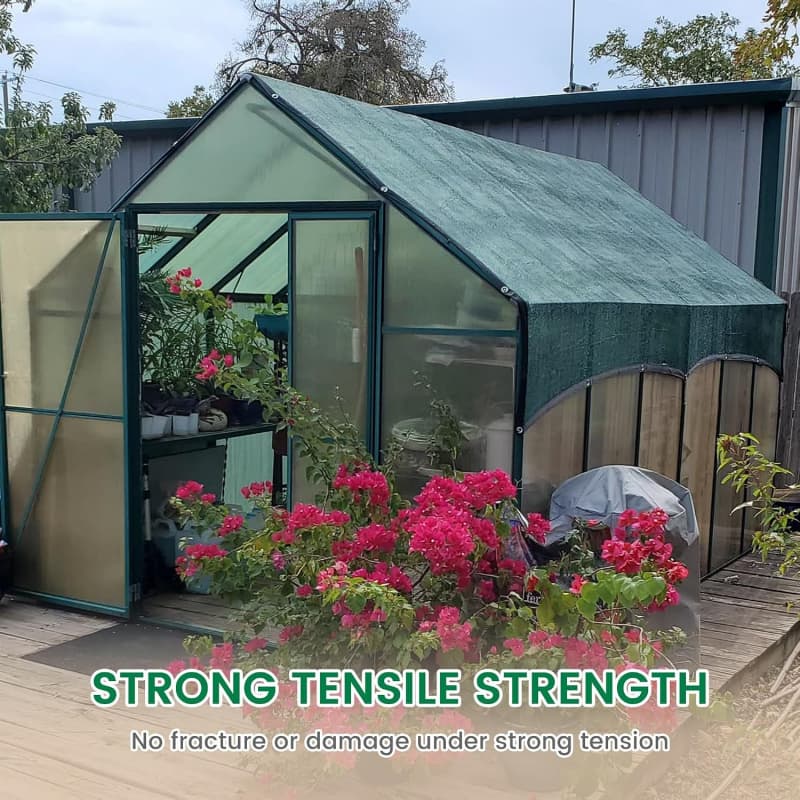
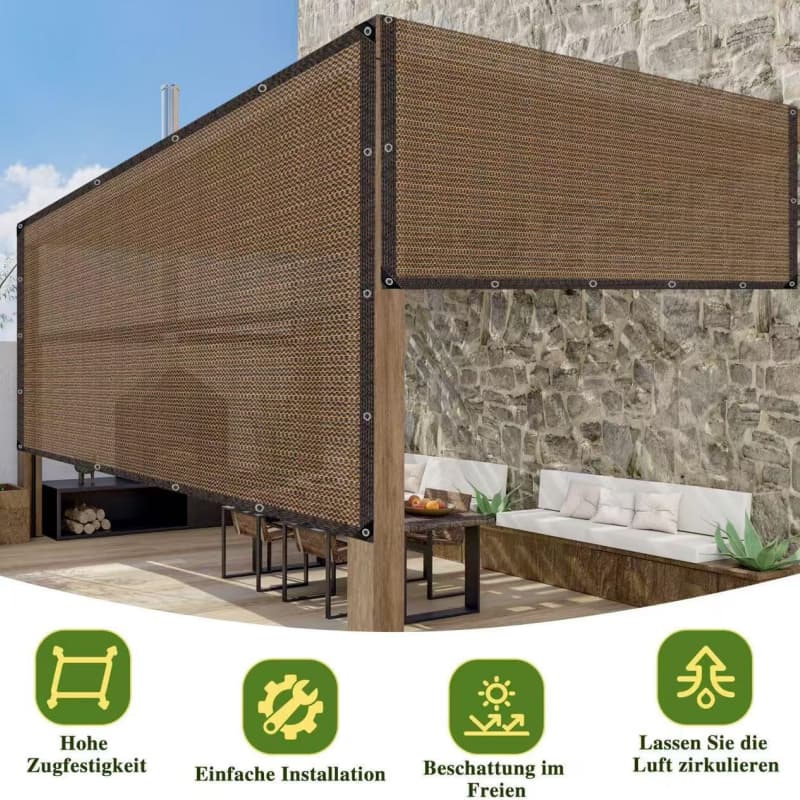
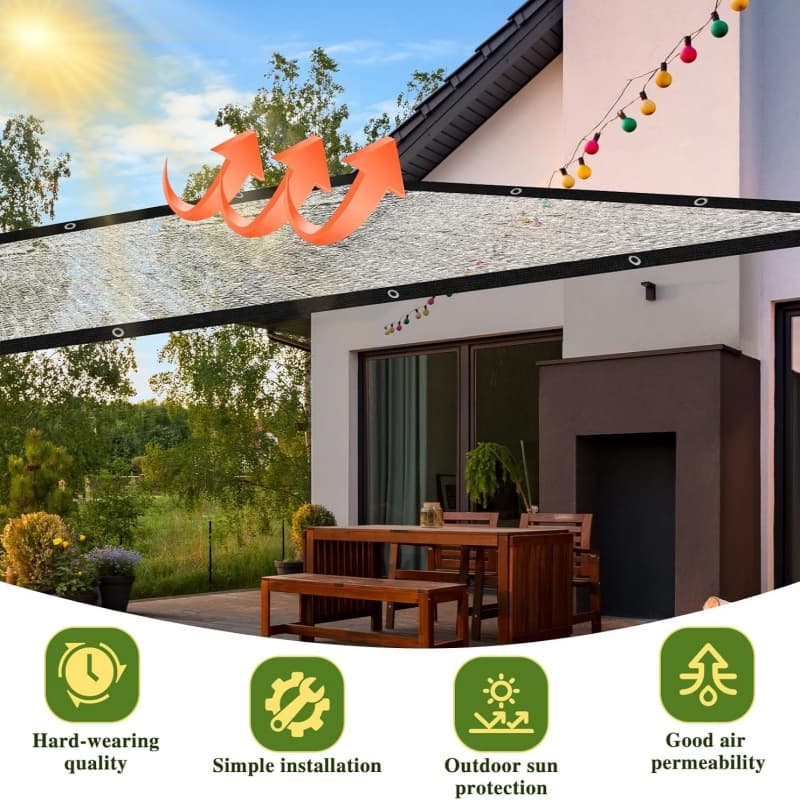
    Shade Mesh Tarp with Pre-Installed Aluminum Grommets — Fast, Simple Installation for All Outdoor Shading Projects   Setting up outdoor shade used to be frustrating. Plain shade mesh rolls require manual hole punching, extra grommet kits, and hours of labor. Improvised holes easily tear along edges, especially in windy weather. Our shade mesh tarp solves this pain point. It arrives pre-fitted with evenly spaced aluminum grommets along the full perimeter, paired with heavy-duty reinforced black binding edges. No DIY punching, no special tools, no complicated prep work. You can finish installation quickly and safely by yourself or with a small team.   Why Pre-Installed Aluminum Grommets Make Installation So Much Easier   The aluminum grommets are factory pressed into the thick black reinforced edge, perfectly spaced around the tarp and reinforced at every corner.   Ready-to-use mounting points right out of the package. Just grab ropes, bungee cords or zip ties and thread through the aluminum eyelets.   Rust-resistant aluminum material. Unlike cheap iron grommets that rust and stain mesh after rain, aluminum stays intact year-round under outdoor UV and moisture.   Even tension distribution. Multiple anchor points spread wind force evenly, reducing flapping and preventing edge tearing.   Simple removal & repositioning. Unfasten the ties quickly when you need to take down, adjust or relocate the tarp for different seasons or projects.   The reinforced black edge works hand in hand with aluminum grommets. Thick black binding tape and double stitching lock the mesh fabric. Pulling force transfers to the reinforced edge instead of directly on the mesh weave. Even under repeated tension or strong gusts, the edge will not fray or rip around grommet holes.   Product Performance: More Than Just Easy Mounting   This shade mesh tarp is knitted from UV-stabilized virgin HDPE. The breathable mesh design allows air and rainwater to pass through, avoiding trapped heat and water pooling under the cover.   We offer multiple shade rates, including the popular 70% shade rate (130gsm). This level blocks harsh sunlight and reduces surface temperature, while keeping enough airflow for plants, livestock or outdoor living areas. Custom sizes are available to match pergolas, greenhouses, construction sites, livestock shelters, pool privacy screens and backyards.   Step-by-Step Simple Installation Guide   You only need ropes, bungee cords or zip ties. No drilling or special tools required.   Unfold and lay the shade mesh tarp flat, align aluminum grommets with your support posts, frame or railings   Start securing from the four corners first, then work along edges through the pre-installed aluminum grommets   Tighten fasteners evenly on all sides to balance tension; avoid over-stretching the mesh.   For windy locations, add extra ties on intermediate grommets to reduce tarp flapping.   When the season changes, simply release all fasteners, fold the tarp for compact storage until next use.   Common Applications for Our Aluminum Grommet Shade Mesh Tarp   Greenhouse & nursery: protect crops and flowers from sunburn   Patio, pergola, backyard: create cool shaded leisure zones   Livestock shelters: shade for chicken coops, barns and animal pens   Construction sites: temporary sun protection for workers and materials   Poolside, carport: sun shading and lightweight privacy screening   Final Thoughts   For gardeners, contractors, farm owners and wholesale buyers, the biggest advantage of this shade mesh tarp is convenience and reliability. Pre-installed aluminum grommets plus reinforced black edges cut installation time drastically, while delivering long-term outdoor durability.   If you want shade mesh that is simple to hang, strong against wind and easy to reposition, our shade mesh tarp with aluminum grommets is your ideal shading solution.
    Read More
  • PP Woven Ground Cover vs Non-Woven Weed Mat: Which Is Better for Your Project?
    PP Woven Ground Cover vs Non-Woven Weed Mat: Which Is Better for Your Project?
    Oct 08, 2026
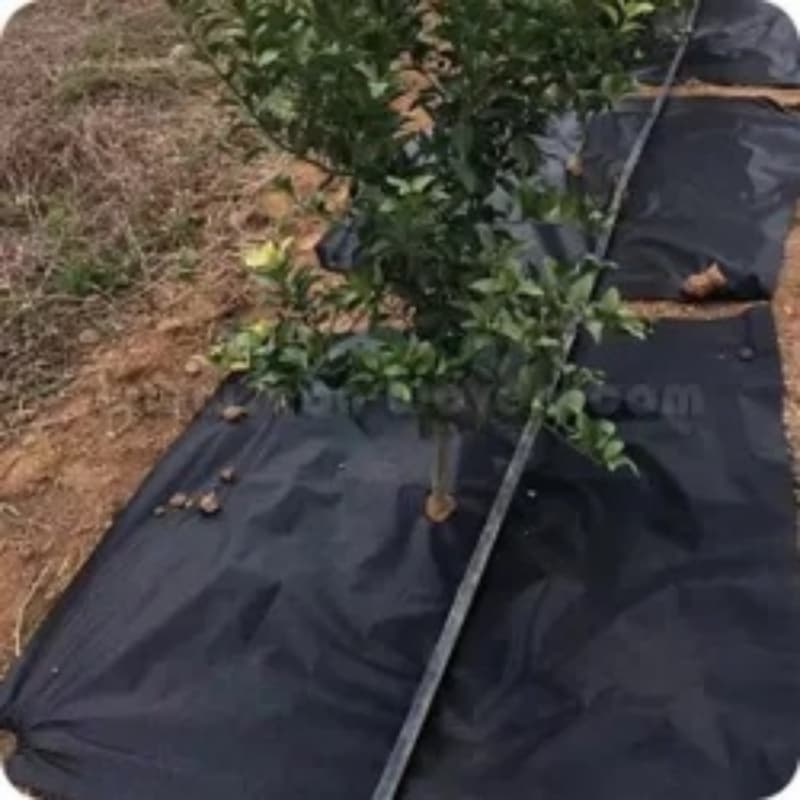
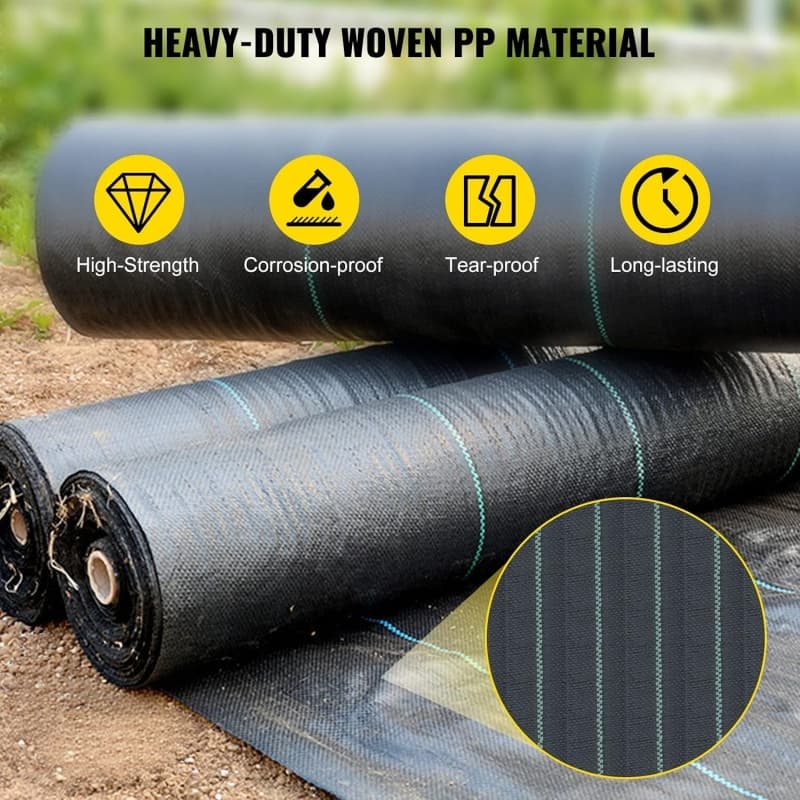
      When shopping for agricultural and landscaping ground protection materials, buyers always face a classic choice:PP woven ground cover or PP non-woven weed mat. Both are popular polypropylene-based weed barrier fabrics used for weed suppression, soil protection, and moisture retention, but their internal structure, performance, service life, and applicable scenarios are vastly different.   Many project owners and wholesale buyers mistakenly believe “all ground covers are the same” and choose cheap non-woven fabric, only to face frequent tearing, rapid aging, poor weed control, and repeated replacement costs in the later stage. To help you make a cost-effective, project-matching decision, we launch this in-depth comparison blog, covering material structure, durability, permeability, service life, application scenarios, and overall cost performance.   1. Fundamental Structural Difference (Core Gap)   PP Woven Ground Cover   Made of 100% virgin PP flat yarns through precise cross-weaving technology. The interlaced grid structure forms an integrated, high-toughness fabric with stable and uniform mesh pores. The whole piece has strong structural integrity, no loose fibers, and no easy delamination. Most professional agricultural ground covers and long-term landscape weed barriers adopt this woven structure.   PP Non-Woven Weed Mat   Produced by spun-bond or needle-punching process. PP fibers are bonded together via heat pressing or chemical adhesion, forming a soft, felt-like texture without fixed weaving lines. The fibers are loosely connected, resulting in a fluffy and flexible overall structure but weak overall stress resistance.   2. Key Performance Comparison (Full Dimensions)   Durability & Tear Resistance   Woven Ground Cover: Excellent   The cross-woven grid structure delivers ultra-high tensile and tear strength. It can resist daily trampling, mechanical rolling, and outdoor wind and rain erosion. It will not crack, tear, or deform during installation and long-term use. Even with partial cutting, the edges will not loose or shed fibers, maintaining overall structural stability.   Non-Woven Weed Mat: Weak   The fiber-bonded structure cannot bear strong tension. It is prone to tearing, puncturing, and fiber shedding when encountering slight friction, stretching, or stone sharp edges. After long-term outdoor exposure, the bonding force fails easily, causing pulverization and damage, which greatly affects the overall protection effect.   UV Resistance & Service Life   Woven Ground Cover: Long Lifespan   Professional UV stabilizers and anti-aging agents are added to virgin PP raw materials. The tight weaving structure effectively resists ultraviolet radiation and high-temperature oxidation. The outdoor service life can reach 3 years, and 3+ years in shaded environments, suitable for long-term fixed projects.   Non-Woven Weed Mat: Short Lifespan   Most non-woven fabrics use ordinary formula or recycled materials with poor UV resistance. They are easy to fade, brittle, and pulverize after sun exposure. The outdoor service life is only 1–2 years, requiring frequent replacement and increasing later maintenance costs.   Permeability & Soil Protection   Woven Ground Cover: Scientific Balanced Performance   Uniform micro-grid pores realize one-way shading and two-way breathable drainage. It completely blocks sunlight to inhibit weed growth (99% weed suppression rate), while allowing rainwater, irrigation water, and air to penetrate freely. It avoids soil hardening, waterlogging, and root hypoxia, protecting soil activity and promoting plant root growth.   Non-Woven Weed Mat: Unstable Permeability   The internal pores are irregular and uneven. The water permeability is high in the early stage, but the pores are easy to block after dust accumulation and fiber deformation, resulting in poor drainage and water accumulation on the ground. Excessive water retention easily causes soil mildew and root rot, which is not conducive to crop growth.   Weed Suppression Effect   Woven Ground Cover: Stable & Long-lasting   High-density weaving achieves full light isolation, with zero light transmission. It fundamentally cuts off the photosynthesis of weeds, preventing weed germination and growth. The effect remains stable throughout the service period without attenuation.   Non-Woven Weed Mat: Gradual Failure   Partial non-woven fabrics have low density and slight light transmission. After long-term use, fiber thinning and local damage will cause light leakage, leading to recurrent weed growth and poor long-term weed control effect.   Installation & Maintenance   Woven Ground Cover: Equipped with professional planting marker lines for accurate layout. The fabric is stiff and tidy, not easy to wrinkle and shift after laying. It requires almost no daily maintenance.   Non-Woven Weed Mat: Light and soft, easy to cut but easy to shift and wrinkle. It needs more fixing accessories, and the damaged part cannot be repaired, requiring regular inspection and replacement.     3. Applicable Scenarios: Choose According to Your Project   Choose PP Woven Ground Cover If You Have:   Long-term fixed projects: Orchards, vineyards, tea gardens, perennial nursery stock bases   High-frequency use scenarios: Park landscapes, municipal greening, scenic spot ground protection   Engineering-grade projects: Slope protection, farmland renovation, commercial green belts   Cost-saving demand: One-time laying, multi-year use, zero frequent maintenance   Choose Non-Woven Weed Mat Only If You Have:   Short-term temporary projects: Seasonal vegetable planting, temporary flower beds   Low-frequency, light-use scenarios: Family private small gardens, indoor potted planting   Ultra-low budget temporary landscaping with no long-term durability requirements     4. Cost Performance Analysis: Cheap Does Not Mean Cost-Effective   On the surface, PP non-woven weed mat has a lower unit price, but its short service life and easy damage lead to multiple purchases and repeated construction within 3 years. The comprehensive labor and material costs are extremely high. PP woven ground cover has a slightly higher initial investment, but it can be used stably for 3 years outdoors with one-time laying. It greatly saves manual weeding, replacement, and maintenance costs, with far higher long-term cost performance. It is the recognized cost-effective choice for commercial planting and engineering landscaping.   5. Final Verdict   For commercial agriculture, engineering landscaping, and long-term ground protection: PP Woven Ground Cover is the absolute best choice. It outperforms non-woven mats in durability, weed control stability, soil protection, and comprehensive cost performance, perfectly adapting to harsh outdoor environments. For only temporary, small-area, low-budget family gardening: Non-woven weed mat can meet basic short-term weed control needs.   FAQ   Q1: Is woven ground cover better than non-woven? A1: For most commercial and outdoor projects, yes. Woven PP ground cover offers better tear resistance, UV stability, and longer service life, while maintaining balanced breathable drainage performance.   Q2: Can non-woven weed mat be used for orchard planting? A2: Not recommended. Orchards require long-term outdoor placement and occasional mechanical operation. Non-woven fabric is easy to damage and age, unable to achieve stable long-term weed control.   Q3: Does woven ground cover block water and air? A3: No. Professional woven ground cover adopts scientific micro-pore design, which only blocks sunlight and weeds, without affecting water infiltration and soil air circulation.    
    Read More
  • Why Everyone Is Switching to Breathable Mesh Shade Tarp
    Why Everyone Is Switching to Breathable Mesh Shade Tarp
    Sep 24, 2026
      If you’ve ever used a regular tarp for outdoor shade, you’ve definitely felt the frustration:   It blocks the sun, but traps insane heat. It keeps the light out, but turns your patio or yard into a stuffy sauna. After raining, water pools on top, it gets moldy, sags down, and even tears easily in the wind.   For years, homeowners, gardeners, and farm owners had to compromise:either get shade and suffer heat, or get airflow with no sun protection at all.   But now, the game has completely changed — thanks to the Shade Mesh Tarp, the new favorite outdoor shade solution for every backyard, garden, farm, and poolside.   The Biggest Problem With Traditional Tarps (And How Mesh Fixes It)   Standard solid tarps are airtight. That means when summer heat hits, all the hot air gets locked underneath. Your plants get steamed, your patio feels hotter, pets refuse to stay under the shade, and moisture builds up nonstop.   Cheap thin shade nets, on the other hand, let air flow but offer zero real UV protection. They tear quickly, fade in one season, and become completely useless.   Our Shade Mesh Tarp solves both problems at once.   It gives you perfect sun blocking without blocking fresh air. It creates a cool, ventilated shaded area that actually feels comfortable — even on the hottest summer noon.   What Makes This Mesh Tarp So Unique?   1.Shade That Breathes (No More Sauna Effect)   The precision woven mesh structure allows 360° cross ventilation and rainwater penetration. No heat buildup, no water pooling, no damp and moldy smell. Your shaded space stays cooler, drier, and fresher all day long.   2.Real UV Protection, Not Just “Fake Shade”   Made of upgraded UV-stabilized HDPE material, this mesh tarp blocks over 90% of harmful UVA/UVB rays. It effectively prevents sunburn for plants, heatstroke for pets, and sun fading for your outdoor furniture, cars, and equipment.   3.Built Tough for All Outdoor Weather   Most mesh tarps fray, rip, and loosen after a few weeks of wind and sun. Ours is fully reinforced:   Double stitched thickened edges + rust-proof reinforced grommets on every side. It resists tearing, wind gusts, high-temperature aging, and fading. It stays sturdy and neat through summer heat, windy days, and rainy seasons.   4.Super Light & Super Easy to Use   Heavy-duty protection doesn’t mean heavy weight. This shade mesh tarp islightweight, foldable, and portable.   You can install it alone in minutes, fold it up for storage when not in use, and reuse it season after season. No complicated tools, no bulky storage trouble.   Who Needs This Shade Mesh Tarp?   Honestly — anyone with an outdoor space.   Garden Lovers: Protects seedlings, flowers, and vegetables from intense sunscald while keeping plants well-ventilated and healthy.   Home Owners: Creates a cool shaded zone for patios, backyards, decks, and pool areas for relaxing outdoor time.   Pet & Livestock Keepers: Provides safe, dry, breathable shade for dog houses, chicken coops, and farm shelters to avoid heat stress.   Farm & Outdoor Workers: Ideal for field shading, construction site sun protection, equipment covering, and temporary outdoor shade.   Final Verdict: The Best All-Season Outdoor Shade Investment   If you’re still using old, stuffy, easily broken tarps, it’s time for an upgrade.   This Shade Mesh Tarp is not just a simple shade cloth. It is a smart, weather-proof, long-lasting outdoor solution that keeps your space cooler, safer, and more comfortable all year round.   Shade without stuffiness. Protection without hassle. Durability without the high cost.      
    Read More
  • Why Flame Retardant Safety Net Is a Must for Modern Construction Site Safety
    Why Flame Retardant Safety Net Is a Must for Modern Construction Site Safety
    Sep 23, 2026
      In modern building construction, high-rise renovation, bridge engineering and various industrial projects, site safety is always the top priority for contractors, project managers and global construction buyers. Among all safety protection facilities, the flame retardant safety net has become an indispensable basic protective material. Different from ordinary common safety nets, it integrates fall prevention, debris blocking and fire resistance functions, perfectly solving multiple hidden dangers on construction sites. More and more engineering teams and bulk purchasers choose high-quality fire resistant construction safety net to standardize site construction and reduce safety accidents.   1. The Hidden Dangers of Ordinary Safety Nets on Construction Sites   Most ordinary HDPE safety nets on the market only have basic anti-fall and dust blocking effects, with obvious shortcomings in fire resistance. Construction sites are filled with flammable materials such as wooden templates, plastic pipelines and construction waste. Meanwhile, frequent welding, electric cutting and high-temperature operation will produce sparks and high-temperature slag. Ordinary safety nets are easy to burn rapidly when encountering open fire, which will quickly spread flames, expand the fire scope, and easily cause large-area site fires, bringing huge property losses and safety risks to personnel and engineering projects. In addition, inferior safety nets are prone to aging, brittle fracture and tearing after long-term exposure to ultraviolet rays, wind and rain outdoors, losing protection performance in advance, which cannot meet the long-term construction safety standards of engineering projects. This is why standard construction projects have gradually eliminated ordinary safety nets and adopted professional self extinguishing safety net.   2. Core Advantages of High-Quality Flame Retardant Safety Net   Professional flame retardant safety net is made of pure new HDPE raw materials, blended with high-efficiency flame retardant additives and UV stabilizers in the production process, not simply surface spraying. This integrated production process ensures permanent and durable flame retardant performance, which will not fail due to sun exposure, rain washing and long-term outdoor use.   Excellent Fire Resistance, Effectively Suppress Fire Spread   The biggest feature of heavy duty flame retardant safety net is self-extinguishing performance. When encountering welding sparks or open fire, it will not burn continuously. Once leaving the fire source, it will automatically extinguish the flame, effectively blocking the spread of open fire and burning slag, greatly reducing the probability of construction site fires, and providing reliable fire safety protection for high-rise buildings, scaffolding and construction operation areas.   High Tensile Strength, Reliable Fall and Debris Protection   The net body adopts dense high-strength weaving technology, with strong tear resistance and impact resistance. It can effectively block falling construction debris, gravel and tool parts, and buffer the impact force of high-altitude falling objects. At the same time, it can prevent construction personnel from accidentally falling from high altitude, fully meeting the fall protection requirements of building construction sites. Whether it is scaffolding enclosure protection or high-rise outer wall safety isolation, it can maintain stable protective performance.   UV Resistant and Anti-Aging, Long Service Life   Added with professional UV anti-aging formula, the UV stabilized safety net can adapt to harsh outdoor environments such as strong sunlight, heavy rain and extreme temperature changes. It is not easy to age, brittle, deform or fade after long-term outdoor use, with a longer service life than ordinary safety nets, reducing the frequent replacement cost of construction sites and saving engineering procurement expenses for customers.   Lightweight and Easy to Install, Save Construction Cost   Compared with traditional protective facilities, HDPE flame retardant safety net is lightweight and flexible, easy to fold, transport and store. The installation process is simple and fast, which can be quickly fixed on scaffolding, building exterior walls and engineering operation areas, greatly saving construction time and labor costs, and improving the overall construction efficiency of the project.   3. Main Application Scenarios of Flame Retardant Safety Net   Due to its dual advantages of safety protection and fire prevention, custom size flame retardant safety net is widely used in various high-risk construction and industrial scenarios, covering most engineering protection fields:   High-rise building construction and exterior wall renovation protection   Scaffolding enclosure safety protection for construction projects   Bridge, tunnel and municipal engineering fall prevention and debris blocking   Factory workshop fire isolation and high-altitude operation protection   Large stadium, venue construction and temporary engineering protection   Whether it is small engineering projects or large-scale bulk procurement, customized mesh density, weight, size and color can be provided to meet different national construction safety standards and project personalized needs.   4. How to Choose Qualified Construction Flame Retardant Safety Net?   Many purchasers confuse ordinary safety nets with flame retardant safety nets, resulting in unqualified site safety inspection and potential safety hazards. When purchasing, you must focus on the following core points: First, check the production process. Choose products with internal blending flame retardant process, avoid surface sprayed flame retardant safety nets, which are easy to fail in flame retardant effect after wind and rain erosion. Second, focus on tensile strength and toughness. High-quality products are not easy to tear and have strong impact resistance. Third, confirm the anti-aging and UV resistance performance to ensure long-term outdoor use. Finally, choose regular manufacturers, which can provide professional test reports to support project acceptance and customs clearance.   5. Conclusion   With the continuous improvement of global construction safety standards, ordinary safety nets can no longer meet the high-standard safety protection needs of modern engineering. Flame retardant safety net has become the mainstream choice for construction site safety protection by virtue of its excellent fire resistance, fall prevention, anti-aging and high-strength protection performance. It not only effectively avoids construction safety accidents and reduces engineering risks, but also saves procurement and maintenance costs for project parties.   If you are looking for high-quality, cost-effective wholesale flame retardant safety net and need customized specifications and official test reports, welcome to contact us. We provide one-stop safety net solutions for global engineering contractors, distributors and importers.    
    Read More
  • Why Aluminum Shade Net Is Becoming The First Choice For Modern Outdoor Shading Projects
    Why Aluminum Shade Net Is Becoming The First Choice For Modern Outdoor Shading Projects
    Sep 22, 2026
      In outdoor shading and temperature control projects, most buyers used to only focus on traditional plastic shade nets. Low cost and basic shading functions made them popular for a long time. However, with the upgrading of agricultural planting standards, construction safety requirements and outdoor facility durability demands, ordinary shading products have gradually exposed obvious shortcomings: single shading effect, easy heat accumulation, short service life and poor adaptability to extreme weather. Against this industry background,aluminum shade net has quickly become a dark horse in the global shading material market. Different from traditional products that only block sunlight mechanically, it adopts innovative heat reflection technology, perfectly balancing shading, cooling, ventilation and durability. It has now been widely recognized in greenhouse planting, livestock breeding, building engineering, outdoor storage and other fields. This blog will deeply analyze why aluminum shade net is replacing traditional shading materials and becoming the preferred solution for modern engineering and agricultural projects.   1. Core Advantage: Reflect Heat Instead Of Absorbing It, Realizing True Constant Temperature Shading   The biggest pain point of ordinary HDPE shade nets is heat gathering. After absorbing sunlight and infrared heat, the mesh itself will heat up continuously, and the accumulated heat will be released into the covered space, resulting in "shady but stuffy" situation. Especially in high-temperature summer environments, the internal temperature can hardly be effectively reduced, which is easy to cause heat damage to crops and livestock. Aluminum shade net completely subverts this working logic. The embedded high-purity aluminum reflective filaments can efficiently reflect solar infrared radiation and thermal radiation back to the air, instead of trapping heat in the mesh and the covering area. While blocking strong glare, it retains soft and uniform diffused light. This unique physical cooling principle can reduce the internal ambient temperature by 5-10℃ compared with traditional shading nets, creating a stable and comfortable microclimate for plants, animals and outdoor facilities.   2. Break The Industry Dilemma: Ventilation And Shading Coexist   Many high-efficiency heat insulation materials on the market are mostly dense and airtight. Although they have good heat insulation effects, they will block air circulation, cause poor internal ventilation, breed moisture and mold, and even affect the growth of crops and the health of livestock. In contrast, the mesh structure design of aluminum shade net realizes the perfect integration of shading and ventilation.   The standardized hollow mesh allows natural wind to circulate freely without wind pressure accumulation. It will not cause structural damage to greenhouses, breeding sheds and building scaffolds due to strong wind. At the same time, rainwater can quickly penetrate the mesh surface without water accumulation, avoiding material aging and mildew caused by long-term humidity. It solves the common industry problem of "good shading without ventilation, good ventilation without heat insulation".   3. Super Durability, Adapt To All Extreme Outdoor Environments   Outdoor shading materials need to resist ultraviolet radiation, high temperature baking, wind and rain erosion all year round. Traditional plastic shade nets are prone to aging, brittleness, fading and tearing after 1-2 years of use, requiring frequent replacement and increasing project maintenance costs.   Our aluminum shade net adopts a composite process of high-density HDPE base fabric and integrated aluminum filament lamination. The aluminum layer is tightly combined with the mesh, not easy to peel or fall off. The whole material is added with imported UV stabilizers and anti-aging additives. It can resist strong ultraviolet radiation, high temperature oxidation and low-temperature frost damage. The service life is 3-5 times that of ordinary shading nets. It maintains stable tensile strength and shading performance in long-term outdoor use, greatly reducing the secondary purchase and installation cost of users.     4. Wide Compatibility, Cover All Scenario Shading Demands   The versatility of aluminum shade net is far beyond traditional single-function shading products. It can be customized with different shading rates, sizes and edge reinforcement processes to accurately meet the diversified needs of different scenarios: Agricultural planting: Suitable for vegetable greenhouses, flower nurseries, seedling cultivation. It avoids sunburn and heat stress of crops, ensures sufficient diffused light for photosynthesis, and effectively improves crop yield and quality. Livestock breeding: Used for cattle, sheep and poultry sheds. It reduces indoor temperature, improves air circulation, reduces bacterial growth, and ensures the healthy growth of livestock and poultry. Construction engineering: Covered on building roofs and scaffolding to reduce building surface heat absorption, lower construction temperature, and protect building structures and construction personnel from high-temperature sun exposure. Outdoor public facilities: Ideal for courtyard shading, outdoor storage yards, temporary activity venues and other scenes, with lightweight and easy-to-install characteristics.   5. Low Maintenance & High Cost Performance, Ideal For Bulk Projects   For engineering contractors, agricultural suppliers and bulk purchasers, the comprehensive cost performance of materials is the core consideration. Aluminum shade net has obvious advantages in later maintenance: it is resistant to moisture, mold, fertilizer and daily friction, no special maintenance is required after installation. It can be cleaned with water directly when dusty, and can be folded and stored for repeated use in idle seasons. Although the initial purchase cost is slightly higher than ordinary shading nets, its ultra-long service life and stable performance greatly reduce the frequency of replacement and maintenance labor costs. In the long run, it is the most cost-effective shading solution for large-scale and long-term outdoor projects.   Final Summary   With the continuous upgrading of outdoor engineering and modern agricultural standards, simple sun-blocking shading products can no longer meet the high demand for fine temperature control and long-term use. Aluminum shade net has broken through the technical bottleneck of traditional shading materials with its unique heat reflection principle, ventilated shading design and super outdoor durability. Whether it is small-scale household outdoor shading or large-scale commercial agricultural and engineering projects, aluminum shade net can bring stable, efficient and long-lasting shading and cooling effects. It is not only a practical shading material, but also a cost-saving and efficiency-improving essential product for modern outdoor projects. In the future, it will further replace traditional shading nets and become the mainstream choice in the global shading market.      
    Read More
  • Why Breathability Makes PP Ground Cover Better Than Plastic Mulch for Crop Growth
    Why Breathability Makes PP Ground Cover Better Than Plastic Mulch for Crop Growth
    Sep 21, 2026
    Introduction: The Hidden Danger of Traditional Weed Barriers   Most growers and landscapers assume that all weed control materials work the same — block sunlight and kill weeds. However, many cheap plastic films and non-woven landscape fabrics solve one problem while creating another: they suffocate the soil.   A weed barrier’s ultimate goal is not only to stop weeds, but to protect and optimize the growing environment. Ordinary airtight mulch causes water accumulation, poor soil ventilation, root hypoxia, soil hardening, and frequent crop disease. This is why professional farmers and commercial landscapers are gradually switching from plastic film to woven PP ground cover — mainly for its unique breathable and permeable performance.     How PP Ground Cover’s Breathable Woven Structure Works   Different from fully covered plastic film, high-quality PP ground cover adopts a precision cross-woven flat yarn structure. The weaving gaps are scientifically controlled at a micro level, forming a “smart barrier” that features selective isolation.   The compact weaving density blocks over 98% of sunlight, completely cutting off weed photosynthesis and inhibiting weed germination from the soil bottom. At the same time, the uniform micro gaps allow air, rainwater, irrigation water, and dissolved nutrients to penetrate freely into the soil layer.   This means the ground cover kills weeds but does not seal the soil. It suppresses useless weed growth while maintaining the vitality of the planting soil.     The Core Benefits of Breathable Ground Cover for Agriculture     1. Prevents Root Rot and Soil Hardening   Airtight plastic mulch traps excess water after irrigation or rainfall. The accumulated water cannot evaporate or drain quickly, creating a long-term humid and anaerobic environment around plant roots. This easily causes root rot, stuffy roots, and stunted crop growth. Meanwhile, long-term water retention without air circulation will compact the topsoil and damage soil structure.   Breathable PP ground cover solves this problem perfectly. Excess water drains timely, air circulates continuously, and the soil remains loose and breathable all year round, creating a healthy aerobic growth environment for roots.   2. Maintains Soil Microbial Activity   Healthy farmland soil relies on active microorganisms to decompose organic matter and provide nutrients for crops. Fully enclosed plastic mulch severely reduces soil air circulation, leading to reduced microbial activity and declining soil fertility over time. PP woven ground cover ensures continuous gas exchange between soil and air. It preserves soil biological activity, improves nutrient utilization efficiency, and makes crops grow stronger and more vigorous.   3. Avoids Silt Blockage and Long-Term Performance Degradation   Many non-woven fabrics will gradually harden and block after absorbing soil silt, mud and organic debris. After one growing season, the fabric loses permeability and becomes another airtight barrier. The flat yarn woven structure of PP ground cover features smooth surface and stable gap structure. It is not easy to absorb mud and silt, effectively preventing pore blockage. Its breathability and water permeability remain stable for many years without attenuation.   Why Breathability Equals Higher Yield and Lower Maintenance   Many growers ignore that poor soil ventilation is the hidden cause of low yield, frequent diseases, and repeated replanting failures. Using breathable PP ground cover can effectively:   Reduce root diseases caused by damp and anaerobic soil   Improve water and fertilizer utilization rate   Keep soil loose, fertile and active   Cut manual soil loosening work and later maintenance costs   For long-cycle crops such as fruit trees, berries and nursery seedlings, this continuous breathable protection brings more stable growth quality and more reliable economic benefits.   Conclusion: Choose Barrier, Not Blockage   Excellent ground cover should never simply “cover the ground”. It should block weeds, preserve moisture, stabilize soil, and maintain soil vitality. If you are still using airtight plastic film or easily blocked non-woven fabric, switching to UV-stabilized breathable woven PP ground cover will be one of the most cost-effective upgrades for your farm and landscape projects.      
    Read More
  • Why Polyester Waterproof Shade Sail Is the Best Choice for Your Outdoor Space
    Why Polyester Waterproof Shade Sail Is the Best Choice for Your Outdoor Space
    Sep 20, 2026
      When decorating and upgrading outdoor spaces, most people struggle with a common dilemma: traditional sun shades are breathable but leak when it rains, while fully enclosed tarpaulins are waterproof but stuffy, bulky, and difficult to manage. If you’re tired of choosing between sun protection, rain resistance, and user-friendliness for your patio, backyard, pool, or garden, a polyester waterproof shade sail is the perfect all-round solution. Unlike ordinary HDPE mesh or mixed-fabric shade sails, polyester material brings unmatched practicality, convenience, and long-term benefits for outdoor use. It is not just a simple shading tool, but a low-maintenance, high-value outdoor protection upgrade for every family and commercial outdoor area.   What Makes Polyester the Ideal Material for Waterproof Shade Sails?   1. Ultra-Easy Use & Installation — No Professional Skills Required   Thanks to the excellent tensile and shaping properties of polyester, the shade sail will not deform or stretch randomly during installation. Equipped with reinforced corners and stainless steel D-rings, it can be quickly fixed on walls, columns, tree trunks, and pergolas. One person can complete the installation in a few minutes without complicated tools or professional construction teams. When encountering extreme weather such as strong typhoons or heavy snow, you can easily remove and store it indoors to avoid damage. Compared with fixed outdoor canopies that cannot be moved or adjusted, polyester shade sails realize free switching of use and storage, greatly improving the flexibility of outdoor space use.   2. True Waterproof Performance Without Sacrificing Air Permeability   With high-density compact polyester base fabric combined with upgraded PU waterproof coating and hot-pressed sealed seams, the fabric forms a complete hydrophobic barrier, which can effectively block heavy rain and prevent water seepage. Rainwater quickly condenses into water droplets and slides off the smooth polyester surface, leaving no water accumulation or leakage. At the same time, the fine fiber structure of polyester retains micro air circulation gaps. Unlike fully enclosed tarpaulins that easily form a greenhouse effect, it keeps the space under the sail ventilated and cool in hot summer, avoiding stuffiness and moisture accumulation. This unique waterproof + breathable dual advantage makes it suitable for long-term daily outdoor use rather than only temporary rain protection. Outdoor products are most likely to become dirty, moldy, faded, and difficult to clean after long-term exposure. However, polyester’s natural material characteristics make daily maintenance extremely simple, bringing great convenience to users.   3. Incredibly Low Maintenance, Save Time and Effort   Polyester fiber has zero water absorption and anti-mold properties. It will not soak up rainwater, breed mold, or rot in humid outdoor environments. The smooth fabric surface resists daily dust, fallen leaves, and bird droppings. Daily cleaning only requires simple water flushing or wiping with a wet cloth, no special cleaning agents or tedious care steps are needed. In addition, polyester has excellent shape retention. It will not shrink in cold winter or stretch and sag in high-temperature summer, avoiding frequent rearrangement and tension adjustment. For busy families and commercial outdoor scenarios, this low-maintenance feature greatly saves daily care time and cost.   4. Long-Lasting Durability & Fade Resistance, Stable All Year Round   It can resist long-term strong ultraviolet radiation, rain erosion, and wind abrasion, maintaining a bright and tidy appearance for years without obvious fading or deformation. Its super tear resistance effectively avoids fabric cracking and damage caused by strong wind pulling and external scratching. Whether it is hot summer, rainy spring, or dry and cold autumn and winter, the polyester waterproof shade sail can maintain stable performance, realizing all-season outdoor protection and avoiding frequent replacement, which greatly improves the cost performance of outdoor decoration.   Fixed hard canopies are easy to accumulate wind pressure in windy weather, prone to shaking, deformation, and even collapse, bringing potential safety hazards. The lightweight and flexible characteristics of polyester material perfectly solve this problem. The soft polyester fabric can buffer wind pressure freely, allow partial air penetration, and will not form strong wind resistance. It is not easy to be damaged or overturned in windy days, ensuring safer outdoor use. Moreover, the foldable design will not produce hard deformation or sharp parts, making it safer for families with children and pets.   Benefiting from the lightweight, adjustable, and versatile characteristics of polyester shade sails, they can be perfectly adapted to any outdoor space. You can freely adjust the installation height and inclination according to actual needs to meet different shading and waterproof demands. It is widely used for patio leisure areas, backyards, gardens, balcony courtyards, swimming pool decks, outdoor dining areas, café outdoor seats, and commercial activity spaces. The minimalist and high-grade solid color appearance will not conflict with outdoor decoration styles, easily improving the overall aesthetics and practicality of the space.   When choosing an outdoor shading solution, practicability, convenience, and durability are always the core criteria. A polyester waterproof shade sail perfectly integrates easy installation, effortless maintenance, real waterproof & breathable performance, long-term weather resistance, and safe use. It abandons the various defects of traditional shading products, provides users with a flexible, labor-saving, and high-cost-performance outdoor protection method, and is undoubtedly the most worthy outdoor shading investment for family and commercial spaces.   5. Light & Wind-Safe Structure, Avoid Outdoor Risks   Fixed hard canopies are easy to accumulate wind pressure in windy weather,prone to shaking, deformation, and even collapse, bringing potential safetyhazards. The lightweight and flexible characteristics of polyester materialperfectly solve this problem. The soft polyester fabric can buffer wind pressurefreely, allow partial air penetration, and will not form strong wind resistance.It is not easy to be damaged or overturned in windy days, ensuring saferoutdoor use. Moreover, the foldable design will not produce hard deformationor sharp parts, making it safer for families with children and pets.     6. Wide Compatibility, Fit All Outdoor Scenarios   Benefiting from the lightweight, adjustable, and versatile characteristics ofpolyester shade sails, they can be perfectly adapted to any outdoor space. Youcan freely adjust the installation height and inclination according to actualneeds to meet different shading and waterproof demands. It is widely used forpatio leisure areas, backyards, gardens, balcony courtyards, swimming pooldecks, outdoor dining areas, cafe outdoor seats, and commercial activityspaces. The minimalist and high-grade solid color appearance will not conflictwith outdoor decoration styles, easily improving the overall aesthetics andpracticality of the space.     Final Verdict   When choosing an outdoor shading solution, practicability, convenience, anddurability are always the core criteria. A polyester waterproof shade sailperfectly integrates easy installation, effortless maintenance, realwaterproof & breathable performance, long-term weather resistance,and safe use. It abandons the various defects of traditional shadingproducts, provides users with a flexible, labor-saving, and high-cost-performance outdoor protection method, and is undoubtedly the most worthyoutdoor shading investment for family and commercial spaces.      
    Read More
  • HDPE Shade Sail vs Polyester Waterproof Shade Sail Which Is Perfect for Your Outdoor Space
    HDPE Shade Sail vs Polyester Waterproof Shade Sail Which Is Perfect for Your Outdoor Space
    Sep 19, 2026
      When shopping for outdoor shade sails most homeowners gardeners and commercial contractors face a critical choice breathable HDPE shade sail or polyester waterproof shade sail. Many buyers assume all shade sails deliver the same performance but the core material defines their functionality comfort and service scenarios. One is a professional breathable sun protection solution while the other is a dual purpose sun and rain all weather shelter made of high strength polyester fabric. In this in depth comparison guide we focus on material differencesreal world performance gapspros and cons and best use cases to help you pick the ideal shade sail without wasting money on mismatched products.   1. Core Material Difference The Root of All Performance Gaps   HDPE Shade Sail Breathable Mesh Material   HDPE shade sails are woven from 100% virgin high density polyethylene yarn with professional UV stabilized additives. It features a uniform open mesh structure with no coating or waterproof treatment on the surface. The whole fabric is lightweight highly flexible and tension resistant. This material is engineered for single core performance maximum ventilation and long term sun resistance. It is the most classic and widely used shading material for outdoor ventilation scenarios. Polyester Waterproof Shade Sail Coated Solid Fabric Different from mesh style HDPE sails our waterproof shade sail adopts high density polyester as the base material paired with eco friendly waterproof and UV resistant coating. Polyester fiber boasts higher tensile strength better dimensional stability and less stretch deformation than ordinary HDPE. After precise coating treatment the compact polyester fabric forms a complete waterproof barrier while retaining soft drapability. This material is designed to solve the pain point of single function of traditional shade sails realizing sun shading and rainproof integration.   2. Key Performance Head to Head Comparison   Waterproof & Rain Resistance   HDPE Shade Sail: Zero waterproof capability. The open mesh structure allows rainwater to pass through directly. It will not accumulate water but cannot provide any rain shelter. It only works as a pure sunshade tool. Polyester Waterproof Shade Sail: Excellent water repellent performance. The tightly bonded polyester base and waterproof coating effectively block light and moderate rain preventing rain penetration. It perfectly keeps patios balconies outdoor furniture and parked cars dry. Note sloped installation is recommended to accelerate water drainage and avoid ponding in heavy rain.   Ventilation & Cooling Comfort   HDPE Shade Sail: This is its biggest advantage. The mesh structure supports 360° air circulation. Hot air under the sail escapes quickly without stuffiness or heat accumulation. Even in extreme summer heat the shaded area maintains natural and cool ventilation which is very friendly for plant growth and outdoor activity spaces. Polyester Waterproof Shade Sail: The solid polyester coated fabric is not fully breathable. It can block heat radiation but will trap a small amount of hot air. The cooling comfort is slightly lower than HDPE mesh sails not suitable for scenarios that require strict ventilation.   UV Protection & Anti Aging   HDPE Shade Sail: Comes with built in UV stabilization. It can block 85%–98% of harmful UVA and UVB rays effectively preventing sunburn and ground overheating. The anti aging performance is outstanding and it is not easy to fade or brittle under long term strong sunlight.   Polyester Waterproof Shade Sail: Polyester fiber itself has superior UV resistance and is matched with anti UV coating. The overall UV blocking rate is over 95% with more thorough shading effect. The integrated coating enhances surface wear resistance and stain resistance effectively resisting outdoor wind dust and ultraviolet erosion.   Wind Resistance & Installation Stability   HDPE Shade Sail: Low wind resistance thanks to the permeable mesh. Wind passes through the fabric freely greatly reducing the risk of sail tearing bracket loosening or overall collapse. It is the preferred choice for coastal areas open yards and windy regions. Polyester Waterproof Shade Sail: Solid fabric bears higher wind pressure. It needs tighter tensioning and firm bracket fixing during installation. It is not recommended for ultra open windy environments but performs stably in conventional residential and commercial scenarios.   3. Pros & Cons Overview   HDPE Shade Sail   Advantages   Super breathable no heat accumulation more comfortable in hot summer   Ultra low wind resistance safe and stable for long term outdoor use   Professional UV filtering soft natural light transmission   Lightweight easy to install clean and maintain   High cost performance suitable for large area shading   Disadvantages   No waterproof function cannot resist rainwater   Poor privacy protection transparent mesh structure   Polyester Waterproof Shade Sail   Advantages   Dual function sun shading + rainproof one sail for all weather use   High strength polyester base tear resistant stretch resistant durable   Solid fabric dustproof anti splash with good privacy shielding   Protects outdoor equipment furniture and vehicles from sun and rain damage   Smooth waterproof surface easy to clean and wash   Disadvantages   Lower ventilation easy to gather hot air in high temperature weather   Higher wind pressure requirement for stricter installation fixing   4. Exact Scenarios to Choose Each One   Choose HDPE Shade Sail If You Need     Shading for gardens greenhouses nurseries and farm crops ventilation is the top priority   Open lawns playgrounds and outdoor activity areas for daily leisure   Coastal suburbs and windy open spaces   Large area engineering shading with budget control   Choose Polyester Waterproof Shade Sail If You Need     Patio balcony courtyard leisure areas needing both sunshade and rain shelter   Carports outdoor storage areas and equipment protection zones   Backyard furniture outdoor kitchen and barbecue area protection   Scenarios requiring basic privacy and dustproof shielding   5. Final Verdict   There is no universal best shade sail only the most suitable one. HDPE shade sail is a professional ventilation focused sunshade solution tailored for plant growth open outdoor activities and windy areas pursuing cool and breathable environment. Polyester waterproof shade sail is a practical all weather protection solution relying on high strength polyester material to achieve sun rain dust multi dimensional protection perfectly solving the problem of sudden weather changes in daily family and commercial use. If you only need summer sun blocking and ventilation choose HDPE. If you want one time installation to cope with sunny rainy and dusty weather all year round polyester waterproof shade sail is your ideal choice.   FAQ   Q1 Is polyester waterproof shade sail fully waterproof? It adopts high density polyester with professional waterproof coating which can effectively resist light and moderate rain. It is not suitable for long term heavy rain flooding scenarios. Sloped installation is recommended for better drainage.   Q2 Which one is more durable HDPE or polyester shade sail? HDPE excels in anti aging and wind resistance for long term open air use. Polyester fabric has better tensile strength and wear resistance with stable waterproof performance for daily all weather use. Both can serve 3–5 years with standard maintenance.   Q3 Does polyester waterproof shade sail feel stuffy? Compared with HDPE mesh it has weaker ventilation but will not be extremely stuffy. It balances waterproof performance and basic air circulation meeting daily outdoor leisure needs.      
    Read More
  • Why Some Shade Nets Are So Cheap? The Truth Behind Low Cost Shade Net
    Why Some Shade Nets Are So Cheap? The Truth Behind Low Cost Shade Net
    Sep 18, 2026
      Many buyers ask us the same question: why can some suppliers offer shade nets at surprisingly low prices, while our UV stabilized HDPE shade net cannot reach that price level even after optimizing production?   The answer mainly lies in raw material selection. Cheap shade nets cut costs mostly by compromising material quality, not by improving production efficiency.   How low-cost shade nets reduce their expenses   1. Use recycled plastic material instead of new HDPE The biggest cost gap comes from raw materials. Low-price shade nets often mix recycled plastic scraps, waste plastic film and mixed recycled pellets. Recycled materials have unstable composition, poor toughness and contain many impurities. Such nets turn brittle quickly under sunlight, fade easily and break after several months outdoors.   2. Little or no UV stabilizer added UV inhibitor (UV additive) is the core ingredient to extend the service life of shade net. Cheap products reduce or completely remove UV additives to cut cost. Without UV protection, the net will degrade rapidly under strong sunlight. It may work for a short time, but becomes fragile and tears within one season.   3. Lower net weight and thinner yarn Another common cost-saving method is reducing gram weight. The yarn is thinner, mesh looser and tensile strength drops significantly. These nets are easy to tear during installation or strong wind. The actual shading rate may also deviate from the labeled value.   4. Simplified weaving and edge treatment Cheap shade nets skip reinforced edges and button holes. Simple weaving technology leads to uneven mesh, loose threads and poor consistency.   Our Shade Net: 100% Virgin HDPE with UV Stabilizer   We do not adopt the above cost-cutting methods. Our shade net uses 100% new HDPE raw material and adds UV stabilizer during extrusion.   Virgin HDPE has stable physical performance, high tensile strength and good flexibility. The UV additive protects the net against ultraviolet damage, resisting aging, cracking and fading under long term outdoor exposure. Our shade net maintains stable shading rate and mechanical strength for years.   We cannot achieve the ultra-low price of inferior shade nets without changing our raw material formula. Because high quality virgin HDPE and UV stabilizer bring fixed material cost. We choose to keep reliable quality rather than sacrifice performance for a lower price tag.   Choose shade net wisely: low upfront cost may turn into higher total cost   Cheap shade net seems attractive at first glance. But frequent replacement, crop loss caused by sudden net breakage and extra labor for re-installation will increase your total expense in the long run.   A durable HDPE shade net with UV protection is a better investment for greenhouses, orchards, poultry farms and garden projects. It protects your plants and livestock, reduces repeated purchasing and saves your time and labor.    
    Read More
1 2 3 4 5 6 7 8 9 10 13 14
A total of14pages

leave a message

leave a message
If you are interested in our products and want to know more details,please leave a message here,we will reply you as soon as we can.
submit

Home

Products

whatsApp

contact